
Short communication
Multiplicative Revan Indices of Rhombus Silicate Network and Rhombus Oxide Network
Guoshun Liu1+, Li Yan2 and Wei Gao3
1School of Mathematics and Physics, Jiangsu University of Technology, Changzhou, Jiangsu, 213001, P.R. China
2School of Engineer, Honghe University, Mengzi 661100, China
2School of Information Science and Technology, Yunnan Normal University, Kunming 650500, China
*Address for Correspondence: Guoshun Liu, School of Mathematics and Physics, Jiangsu University of Technology, Changzhou, Jiangsu, 213001, P.R. China, E-mail: [email protected]
Dates: Submitted: 06 September 2018; Approved: 21 September 2018; Published: 28 September 2018
Citation this article: Liu G, Yan L, Gao W. Multiplicative Revan Indices of Rhombus Silicate Network and Rhombus Oxide Network. Am J Nanotechnol Nanomed. 2018; 1(1): 043-047.
Copyright: © 2018 Liu G, et al. This is an open access article distributed under the Creative Commons Attribution License, which permits unrestricted use, distribution, and reproduction in any medium, provided the original work is properly cited.
Keywords: Theoretical chemistry; Molecular graph; Multiplicative revan index; Rhombus silicate network; Rhombus oxide network
Abstract
Early studies show that the chemical and pharmaceutical properties of compounds are closely related to their molecular structure. Theoretical chemistry provides a method to predict the characteristics of compounds through the topological index calculation. As the expansion of Zagreb index, the Zagreb connection indices were introduced to measure the stability of alkanes and strain energy of cycloalkanes, which can help the pharmaceutical, chemical and medical researchers test the chemical, biological features of new drugs, materials and compounds. In this paper, in light of molecular structure analysis and mathematical derivation, we study the multiplicative revan indices of rhombus silicate network and rhombus oxide network which are widely applied in chemical and material engineering.
Introduction
Along with the improvement of experimental conditions and experimental methods, more and more high-performance materials, drugs were constructed from the laboratory. These synthetic materials and drugs have a large number of potential chemical properties that need to be tested, and can be put into the market after fully understanding their performance. Thus testing the physical, chemical, medical, medicinal properties of the new compound becomes a heavy boring workload. On the other hand, underdeveloped areas do not have enough equipment, reagents and manpower to do this job because of the shortage of funds.
From the early chemical experiments, scientists get an important rule: the properties of the compound are directly related to its molecular structure. This rule allows scholars to predict chemical properties from the theoretical point of view which is originally only determined by the experiment. As an important branch of theoretical chemistry, the chemical graph theory provides us with the following procedures: first we use the graph model to represent the molecular structure of the compound, and this kind of resulting graph is called the molecular graph; secondly, the topological index is defined on the molecular graph, and a topological indicator represents a kind of chemical, pharmaceutical or material property; finally, the performance of the compound is predicted by the calculation of the topological index on a particular molecular graph. This method is not subject to funding constraints, in the absence of instruments and reagent, it can also be carried out the prediction of the chemical properties, and therefore it’s welcome by the researchers from developed countries and regions. In addition to the scholars in the field of chemistry, biology, materials and pharmaceutical, many mathematics experts also joined the study of chemical graph theory, and thus promoted the development of this discipline [1-10].
In chemical graph theory framework, the structure of chemical molecular is represented by a graph in which each atom is denoted as a vertex and each chemical bond is expressed as an edge. Let G= (V(G),E(G)) be a (molecular) graph, where V(G), and E(G are vertex (atom) set and edge (chemical bond) set respectively. A topological index is defined on a graph as a function f: G which maps each graph to a real number. In the past 40 years, inspired by chemistry applications, there were lots of degree-based, distance-based and spectral-based topological indices being introduced, such as Zagreb index, atom-bond connectivity index, Wiener index, geometry arithmetic index, harmonic index, eccentric index, and PI index etc. There are several papers contributing to obtaining these topological indices of special molecular structures in material, biological, pharmaceutical and chemical engineering [11-20].
As an important molecular structure, network structure (for example, dendrimer nanostars) are widely appeared in various of drugs, materials, and other chemical compounds, and it raised large interest from engineering scientists. Tada et al. [21] presented a fragment molecular orbital method which was applied to analyze how the orbitals of the dendrimer nanostars are localized in space as well as in energy. Mirzargar [22] calculated the PI, Szeged, edge Szeged indices and their polynomials of a class of nanostar dendrimers. Dorosti et al. [23] computed the the Cluj index of the first type of dendrimer nanostar. Palma et al. [24] presented a sequential Molecular Dynamics/Quantum Mechanics (MD/QM) study and steady-state spectroscopy measurements of the dendrimer nanostars to obtain the temperature dependence of the electronic absorption process. They considered the nanostar as separate units and performed MD simulations for each chromophore at 10 and 300 K to study the effects of the temperature on the structures. Khalifeh et al. [25] and Darafsheh and Khalifeh [26] determined several distance-based topological indices of dendrimer nanostars. Manuel et al. [27] studied the total-Szeged index of dendrimer nanostar NSC5C6. Alikhani and Iranmanesh [28] computed the Hosoya polynomial of an infinite family of dendrimer nanostar denoted by D3[72]. Alikhani et al. [29] manifested the Harary index of dendrimer nanostar NS2[n]. Quadras et al. [30] yielded the minimum wire length of embedding circulant network into nanostar dendrimer, and the embedding of faulty circulant network into nanostar dendrimer were also studied. For more theoretical results and engineering applications on dendrimer nanostars [31-34].
In this paper, we focus on the multiplicative revan indices of special kind of networks.
Setting and Network Graph Description
For , set as the degree of v. Let = and = be the minimum and maximum degree of molecular graph G. The revan vertex degree of a vertex v in G is defined as. The first and second revan indices of a graph G are defined as [35]:
In this paper, we first introduce the first and second multiplicative revan indices of a graph G, which are described as follows:
We consider a family of rhombus silicate networks. A rhombus silicate network is symbolized by . A 3-dimensional rhombus silicate network is depicted in figure 1.
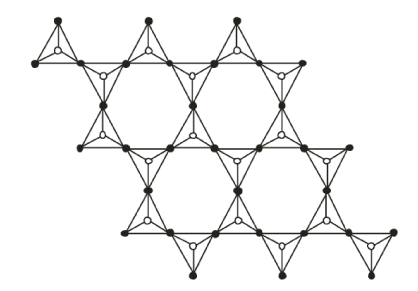 Figure 1: A 3-dimensional rhombus silicate network.
Next, we consider a family of rhombus oxide networks. A rhombus oxide network of dimension n is denoted by . A rhombus oxide network of dimension 3 is depicted in figure 2.
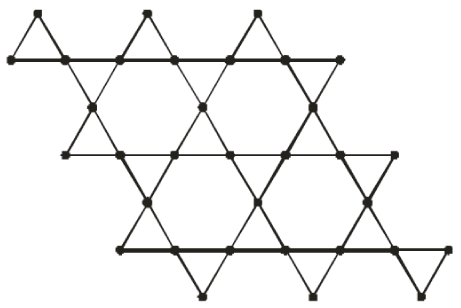 Figure 2: Rhombus oxide network of dimension 3.
Main Results and Proofs
In this section, we present the main conclusions.
Theorem 1
The first and second multiplicative revan indices of are:
5.1.1. Proof: It is easy to check that has vertices and edges. According to the value of and for each edge uv, the whole edge set can be divided into three subsets:
,
. , ;
. , .
Hence, we have and . By means of definition of revan vertex degree, the divided subset of E(G) can be re-written as follows:
. ,
. ,
. ,
Using the definition of the first and second multiplicative revan index, we have
= =
Using the definition of the second multiplicative revan index, we get
= =
Thus, we finish the proof of Theorem 2
Conclusion
By means of the graph structure analysis and mathematical tricks, we finally infer the multiplicative revan indices of rhombus silicate network and rhombus oxide network. The conclusions deduced in this work also demonstrate the promising and wide application prospects in chemical, biological, pharmaceutical and nanoscience engineering.
References
- Balaban AT. Can topological indices transmit information on properties but not on structures? Journal of Computer-Aided Molecular Design. 2005; 19: 651-660. https://goo.gl/UhWSsT
- Munteanu CR, Magalhaes AL, Duardo-Sanchez A, Pazos A, Gonzalez-Diaz H. S2SNet: a tool for transforming characters and numeric sequences into star network topological indices in chemoinformatics, bioinformatics, biomedical, and social-legal sciences. Current Bioinformatics. 2013. 8: 429-437. https://goo.gl/JNRyny
- Buscema M, Asadi-Zeydabadi M, Lodwick W, Breda M. The H-0 function, a new index for detecting structural/topological complexity information in undirected graphs. Physica A-Statistical Mechanics and its Applications. 2016; 447: 355-378. https://goo.gl/3ZgZMz
- Gao W, Wang WF, Farahani MR. Topological indices study of molecular structure in anticancer drugs. Journal of Chemistry. 2016; 8. https://goo.gl/iV6fWA
- Gao W, Wang Y, Basavanagoud B, Jamil MK. Characteristics studies of molecular structures in drugs. Saudi Pharm J. 2017; 25: 580-586. https://goo.gl/mKxKxy
- Bodlaj J, Batagelj V. Network analysis of publications on topological indices from the web of science. Molecular Informatics. 2014; 33: 514-535. https://goo.gl/uWmzr8
- Lokesha V, Deepika T, Ranjini PS, Cangul IN. Operations of nanostructures via SDD, ABC4 and GA5 indices. Applied Mathematics and Nonlinear Sciences. 2017; 2: 173-180. https://goo.gl/ZboruY
- Khakpoor AA, Keshe BA. Physical and electro-optical properties of rylenes as nanostructures using topological indices method. Journal of Nanoelectronics and Optoelectronics. 2016; 11: 280-283. https://goo.gl/Jc3J7A
- Ivanciuc O. Chemical graphs, molecular matrices and topological indices in chemoinformatics and quantitative structure-activity relationships. Curr Comput Aided Drug Des. 2013; 9: 153-163. https://goo.gl/AwAmwX
- Sardar MS, Zafar S, Zahid Z. Computing topological indices of the line graphs of banana tree graph and firecracker graph. Applied Mathematics and Nonlinear Sciences. 2017; 2: 83-92.
- Gao W, Siddiqui MK. Molecular descriptors of nanotube, oxide, silicate, and triangulene networks. Journal of Chemistry. 2017; 2017: 10. https://goo.gl/5wdRS1
- Gao W, Siddiqui MK, Imran M, Jamil MK, Farahani MR. Forgotten topological index of chemical structure in drugs. Saudi Pharmaceutical Journal. 2016; 24: 258-264. https://goo.gl/HC6L88
- Gao W, Farahani MR, Shi L. The forgotten topological index of some drug structures. Acta Medica Mediterranea. 2016; 32: 579-585.
- Gao W, Wang Y, Wang W, Shi L. The first multiplication atom-bond connectivity index of molecular structures in drugs. Saudi Pharm J. 2017; 25: 548-555. https://goo.gl/BcTYov
- Gao W, Wang WF. The fifth geometric arithmetic index of bridge graph and carbon nanocones. Journal of Difference Equations and Applications. 2017; 23: 100-109. https://goo.gl/i3eodQ
- Gao W, Wang WF. The eccentric connectivity polynomial of two classes of nanotubes. Chaos, Solitons & Fractals. 2016; 89: 290-294.
- Ahmadi MB, Sadeghimehr M. Atom bond connectivity index of an infinite class NS1[n] of dendrimer nanostars, Optoelectronics and Advanced Materials-Rapid Communications. 2010; 4: 1040-1042.
- Gracia Guirao JL, T. de Bustos M. Dynamics of pseudo-radioactive chemical products via sampling theory. Journal of Mathematical Chemistry. 2012; 50: 374-378. https://goo.gl/9M7omC
- Gutman I, Das KC. The first zagreb index 30 years after. MATCH Communications in Mathematical and in Computer Chemistry. 2004; 50: 83-92. https://goo.gl/rso79P
- Dimitrov D, Ikica B, Skrekovski R. Remarks on the Graovac-Ghorbani index of bipartite graphs. Applied Mathematics and Computation. 2017; 293: 370-376. https://goo.gl/L52oyF
- Tada T, Nozaki D, Kondo M, Yoshizawa K. Molecular orbital interactions in the nanostar dendrimer. Journal of Physical Chemistry B. 2003; 107: 14204-14210. https://goo.gl/qLsxoa
- Mirzargar M. PI, Szeged and edge Szeged polynomials of a dendrimer nanostar, MATCH Communications in Mathematical and in Computer Chemistry. 2009; 62: 363-370. https://goo.gl/n194dx
- Dorosti N, Iranmanesh A, Diudeaa MV. Computing the Cluj index of the first type dendrimer nanostar. Optoelectronics and Advanced Materials-Rapid Communications. 2010; 4: 381-384.
- Palma JL, Atas E, Hardison L, Marder TB, Collings JC, Beeby A, et al. Electronic spectra of the nanostar dendrimer: theory and experiment. Journal of Physical Chemistry C. 2010; 114: 20702-20712. https://goo.gl/3zaZdD
- Khalifeh MH, Darafsheh MR, Jolany H. The Wiener, Szeged, and PI indices of a dendrimer nanostar. Journal of Computational and Theoretical Nanoscience. 2011; 8: 220-223. https://goo.gl/Rt6Fn3
- Darafsheh MR, Khalifeh MH. Calculation of the Wiener, Szeged, and PI indices of a certain nanostar dendrimer. Ars Combinatoria. 2011; 100: 289-298.
- Manuel P, Rajasingh I, Arockiaraj M. Computing total-Szeged index of nanostar dendrimer NSC5C6. Journal of Computational and Theoretical Nanoscience. 2014; 11: 160-164.
- Alikhani S, Iranmanesh MA. Hosoya polynomial of dendrimer nanostar D3[n]. MATCH Communications in Mathematical and in Computer Chemistry. 2014; 71: 395-405.
- Alikhani S, Iranmanesh MA, Taheri H. Harary index of dendrimer nanostar NS2[n], MATCH Communications in Mathematical and in Computer Chemistry. 2014; 71: 383-394. https://goo.gl/KX9CjD
- Quadras J, Arockiaraj M, Rajasingh I, Shalini AJ, Wirelength of circulant network into nanostar dendrimer. Journal of Computational and Theoretical Nanoscience. 2014; 11: 1223-1229. https://goo.gl/oQ5AkS
- Husin NM, Hasni R, Arif NE. Atom-bond connectivity and geometric arithmetic indices of dendrimer nanostars. Australian Journal of Basic and Applied Sciences. 2013; 7: 10-14. https://goo.gl/9Tsyqf
- Sepulveda-Crespo D, Sanchez-Rodriguez J, Serramia MJ, Gomez R, De La Mata FJ, Jimenez JL, et al. Triple combination of carbosilane dendrimers, tenofovir and maraviroc as potential microbicide to prevent HIV-1 sexual transmission. Nanomedicine. 2015; 10: 899-914. https://goo.gl/HkQqZu
- Çevik E, Bahar O, Şenel M, Abasıyanık MF. Construction of novel electrochemical immunosensor for detection of prostate specific antigen using ferrocene-PAMAM dendrimers. Biosens Bioelectron. 2016; 86: 1074-1079. https://goo.gl/oTvFX4
- Rivero-Buceta E, Doyagüez EG, Colomer I, Quesada E, Mathys L, Noppen S, et al. Tryptophan dendrimers that inhibit HIV replication, prevent virus entry and bind to the HIV envelope glycoproteins gp120 and gp41. European Journal of Medicinal Chemistry. 2015; 106: 34-43. https://goo.gl/bD9tyK
- Kulli VR. Some Gourava indices and inverse sum indeg index of certain networks. International Research Journal of Pure Algebra. 2017; 7: 787-798. https://goo.gl/dUWfPq
Authors submit all Proposals and manuscripts via Electronic Form!