Effectiveness of Warm Saline Distension Media on Relieving Pain in Outpatient Office Hysteroscopy: a Randomized Controlled Clinical Trial
Melad Eskander Tawfek1*, Hossam M Hemeda2 and Medhat Adel Ibrahim2
1Obstetrics and Gynecology Department, Tahta General Hospital
2Obstetrics and Gynecology Department, Faculty of Medicine, Ain Shams University
*Address for Correspondence: Melad Eskander Tawfek, Department of Obstetrics and Gynecology, Tahta General Hospital, Egypt, Tel: +201-006-442-772; E-mail: [email protected]
Submitted: 03 September 2018; Approved: 17 September 2018; Published: 18 September 2018
Citation this article: Tawfek ME, Hemeda HM, Ibrahim MA. Effectiveness of Warm Saline Distension Media on Relieving Pain in Outpatient Office Hysteroscopy: a Randomized Controlled Clinical Trial. Int J Reprod Med Gynecol. 2018;4(3): 064-071.
Copyright: © 2018 Tawfek ME, et al. This is an open access article distributed under the Creative Commons Attribution License, which permits unrestricted use, distribution, and reproduction in any medium, provided the original work is properly cited
Download Fulltext PDF
Background: Outpatient hysteroscopy is the preferred examination procedure for diagnosis of intrauterine pathology and abnormal uterine bleeding causes, in addition for therapeutic operative management. It is desirable to apply as many procedures as possible with an office hysteroscopy, if they are implemented in a safe and effective fashion.
Aim: Evaluation and investigation of the effectiveness of warm saline distensibility media in reducing the pain perceived in women undergoing diagnostic hysteroscopy procedure.
Methodology: A randomized controlled clinical research trial that recruited 82 women scheduled for outpatient office hysteroscopy in Early cancer detection unit in Ain Shams Maternity Hospital from April 2017 till May 2018.Two research groups were categorized into warm saline and normal room temperature saline research groups each contained 41 cases. Comparative analysis of pain perceived in both groups was conducted to assess efficiency of warm saline to reduce pain perception.
Results: Hysteroscopic findings didn’t differ significantly between the two groups, namely ease of introduction of hysteroscope, position of uterus and morphological appearance of the ectocervix, endocervical canal, endometrium, endometrial cavity and tubal ostia. Also, no statistically significant differences were observed between the two groups in the duration of procedure. Parameters of pain assessment differed statistically significantly between the two research groups p value < 0.001. Simple analysis of VAS scores revealed a statistically significantly lower VAS score at the end of the procedure in the warm distention medium group in comparison to the room-temperature distention medium group. The same finding remained constant after 15 minutes from the end of the procedure. Assessment of variation of VAS score with combined variation of temperature of distention medium over time was assessed using repeated measure ANOVA analysis. Patient satisfaction, indicated by the proportion of the patients who would undergo the hysteroscopic examination again by usage of same method, was statistically significantly higher in the warm distention medium research group in comparison to the room-temperature medium research group (89.74% vs 71.05% consecutively) (p value < 0.04).
Conclusion: Pain is measured by VAS score is statistical significantly lower at the end of the procedure in warm saline distension medium research group in comparison to room temperature distension medium research group (1.64 + 0.82 vs 3.05 + 1.17) consecutively denoting possible effectiveness of warm saline in reducing pain perceived in office hysteroscopy.
Introduction
Office hysteroscopy is safe, rapid, well tolerated and highly precise tool in the diagnosis of excessive uterine bleeding. It permits patients and physicians to discuss more management options before surgery involving outpatient operating hysteroscopic surgical procedures. The operative intervention could be performed in the consulting room and on achievement of the procedure the patient could return home immediately. Endometrial cavity is an empty cavity and requires distension to permit visualization. Therefore, during hysteroscopy either fluid or carbon dioxide gas is used to enlarge the endometrial cavity. To achieve a panoramic view, the uterine walls must be forcibly separated. The thick muscle of uterine walls needs a minimum pressure of 40 mm Hg to distend the cavity adequately for hysteroscopic visualization. The advantage of fluid over gas distension media is the symmetric form of distention of the uterus and its efficient capacity to flush blood, mucus, bubbles, and small tissue fragments clarifying the visual field. A pressure of 75 mm Hg is usually enough for uterine distention. The electrolyte rich low viscosity media involve: e.g.: Normal saline, ringer lactate [1-10].
The American Association of Gynecological Laparoscopists recommended the usage of electrolyte-containing fluids in diagnostic and operative clinical scenarios were mechanical, laser or bipolar energy is implemented. Fluid overload with electrolytic solutions could cause pulmonary edema and congestive heart failure; therefore, patients must be strictly monitored when implementing electrolytic solutions as a distensibility media warming the distension fluid to physiological temperature (37.5°C) reduces perceived pain in office hysteroscopy procedures.
Outpatient hysteroscopy is an established diagnostic test. The procedure involves the use of miniaturized endoscopic equipment to directly visualize and examine the uterine cavity, without the need for formal theatre facilities or general or regional anesthesia.
Ambulatory hysteroscopy is a safe, feasible and accurate procedure for diagnosing intrauterine pathology. Provision of outpatient based diagnostic and operative services is gaining prominence as a standard of care, but the experience of pain can be a barrier for cases offered outpatient diagnostic hysteroscopy. The myometrial wall responds to distention, with contractile activity that cases describe as colicky pain of medium to high intensity. Pain could be more in nulliparous cases or during endometrial biopsy. Some researchers have mentioned greater intensity of pain at extremes of age and in cases that had undergone prior surgical cervical interventions. It is likely that colic triggered by uterine contractility could be provoked by cooler temperatures, which is considered hostile to the uterus [11-15].
Aim of the study
The aim of the research study is to evaluate and investigate the efficiency of warm saline distension media in reducing the pain perceived in women undergoing diagnostic hysteroscopy.
Methodology
A randomized controlled clinical research trial. The research study recruited 82 women scheduled for diagnostic outpatient office hysteroscopy in early cancer detection unit in Ain Shams Maternity Hospital from April 2017. After approval of the hospital ethical committee, all study subjects obtained a written, informed consent.
Inclusive research criteria
Inclusive research criteria involved the following in which study subjects age range 20-40 years old normal cervical morphology during speculum examination. Cases complaining of abnormal uterine bleeding and /or undergoing the procedure to assess the endocervical canal, uterine cavity, and tubal ostia for infertility, suspected Mullerian anomalies.
Exclusive research criteria
Exclusive research criteria were pregnancy, suspected acute pelvic inflammatory disease, past history of medical disorders, especially associated with neuropathies, e.g. diabetes, chronic kidney disease, etc. History of vaginal pruritis, discharge, dysuria, dysmenorrhea, dyspareunia or chronic pelvic pain, presence of pain, profuse bleeding or other symptoms at the time of the procedure. History of uterine surgery that occurred less than 1 month previously, history of previous cervical procedures. Administration of general, cervical or paracervical anesthesia or sedatives. Any usage of analgesic agents before the procedure. Cervical preparation by misoprostol before procedure orally or vaginally for cervical ripening to improve the possibility of successful cervical dilation and reduce intraoperative pain. Requirement for cervical dilatation during procedure. Requirement for biopsy or any operative intervention during the procedure.
Randomization
Cases fulfilling the inclusive research criteria were randomized to two research groups.
Statistical Analysis
Results of this study were expressed as means ± Standard Deviation (SD), or number (%). Comparison between the 2 categorical data was performed using t test or and χ2. The data was considered significant if p values was ≤ 0.05 and highly significant if p < 0.01. SPSS computer program (version 19 windows) was used in the statistical analysis.
Study research Group
Involving 41 women undergoing diagnostic outpatient office hysteroscopy. In this group, hysteroscopy was done using warmed normal saline distention medium. Control research Group: Involving 41 women undergoing diagnostic outpatient office hysteroscopy. In this group, hysteroscopy was done using room-temperature normal saline distention medium.
Normal saline (warmed and room-temperature) preparation
Warmed normal saline: Bottles of 500 mL normal saline solution (Otsuka Pharmaceutical Co. Ltd, Japan) was warmed in a thermostatically controlled incubator to a temperature of 37.5°C room-temperature normal saline: Bottles of 500 mL normal saline solution (Otsuka Pharmaceutical Co. Ltd, Japan) stored at room temperature was used. Ambient temperature was kept by an air conditioning system at 28°C.
All study subjects have undergone the following
Clinical history taking for: age, body mass index, parity, cycle phase, whether the patient had previously undergone this examination, indication for the examination, previous surgery including cesarean delivery and curettage, previous cervical procedures such as cauterization, presence of dysmenorrhea, dyspareunia, or hypogastric pain independent of the menstrual period; use of hormone therapy; whether the patient already knew about the examination; whether the patient was calm or anxious; whether the patient had pain, bleeding or other symptoms at the time of undergoing the examination; and any use of analgesic agents before the procedure. Examination and investigations for exclusion of any cervical or pelvic pathology or pregnancy.
Office hysteroscopy conducted by usage of a standard technique by the same surgeon (a senior gynecologist) in both research groups in which a rigid hysteroscope (continuous flow, 30 degree forward oblique view) assembled in a 4-mm diameter diagnostic sheath with an atraumatic tip (Karl Storz Endoscopy®, Tuttlingen, Germany) with a high intensity cold light source and fiberoptic cable was used to illuminate the uterine cavity. Warmed solution of 0.9% normal saline was used as the distention medium in one group and room-temperature solution of 0.9% normal saline was used as distension media in control research group.
The pressure was kept at 100-120 mmHg using a pressure adjustable cuff system with the aim of maintaining the lowest pressure required to distend the uterine cavity. All Office Hysteroscopy procedures was performed with a vaginoscopy approach without utilizing a speculum or applying traction to the cervix with a tenaculum. Antibiotic prophylaxis to prevent pelvic infection was not administered to any of the patients prior to the procedure. If any sign of active vaginal infection was encountered, Office Hysteroscopy was cancelled until a management of vaginal infection.
The severity and level of pain that the patient feels in the procedure was assessed by usage of the Visual Analog Scale (VAS) at 2 times: At the end of the procedure and at 15 minutes after the ending the examination. The patient makes a mark on the VAS line to indicate the intensity of her pain. The distance from the zero point to the marked point is measured using a graduated ruler. Each pain assessment is made on a separate line. Cases satisfaction was assessed as the percentage of cases that have undergone the examination by usage of the same method. The time taken to conduct the procedure was measured in minutes, from introduction of the hysteroscope into the vagina until removing it from the cervix.
Sample Size Justification
Sample size was calculated using EpiInfo® version 6.0, setting the power (β) at 0.02 and the significance level at 0.05. Data from previous reports indicated that mean pain intensity on using warmed saline distention medium during hysteroscopy was 3.84 ± 2.7, while on using room-temperature saline solution was 4.31 ± 3.02 [20]. Calculation according to these values produced a minimal sample size of 74 women to yield statistically significant results. Assuming a drop-out rate of 10%, a total sample size was approximately be 82 women, to be randomized into 2 groups.
Statistical Analysis
Statistical analysis was conducted by usage of Microsoft Excel® 2007 and statistical package for social sciences (SPSS® version 15.0). Data was prescribed as range, mean and standard deviation (for parametric research variables), range, median and interquartile range (for non-parametric research variables) and number and percentage (for categorical research variables). Difference between variables of two research groups was statistically analyzed by usage of student’s t-test (for non-parametric variables) and Chi-squared test (for categorical variables). Difference between variables of more than two groups was analyzed using one-way ANOVA test (for parametric research variables), Kuskal Wallis test (for non-parametric variables) and Chi-squared test (for categorical research variables). Correlation between two research variables was estimated using Pearson’s correlation coefficient (for parametric research variables) and Spearman’s rank correlation coefficient (for non-parametric research variables). Statistical Significance level was set at 0.05.
Results
The current study was conducted in the early cancer detection unit in Ain Shams Maternity University Hospital in the period between May 2017 and May 2018. A total of 82 women planned for diagnostic outpatient office hysteroscopy were included in the study and randomized to either warm or room-temperature distention medium group. A total of 5 patients were excluded during the course of the study to yield a final number of 39 and 38 patients in the warm and room temperature distention medium groups, respectively. The process of recruitment and handling the study population during the course of the study is shown in the flow diagram according to the CONSORT (Consolidated Standards of Reporting Trials) 2010 guidelines.
Figure 1 shows CONSORT 2010 flow diagram showing the recruitment and handling of the study population during the course of the study.as revealed from the flow chart the total number initially recruited was 103 cases and 21 cases from those were excluded due to variable causes (e.g. overt vaginal infection 11 cases, Undiagnosed pregnancy 1case only, Complaining of pelvic pain 9 cases, Medical comorbidity 4 cases, Concomitant cervical pathology 3 cases, Past history of cervical procedure 2 cases only, usage of analgesia before conducting the procedure 3 cases, refusal to participate 2 cases only. Therefore the number of cases recruited was 82 study subjects they were categorized into 2 research groups warm saline research group and normal temperature research group with 41 cases in each research group. Later on 2cases were excluded in warm distension group as one case required operative intervention and the other didn’t tolerate procedure completion. On the other hand 3cases were excluded as one case required cervical dilatation and one case required operative intervention and one case didn’t tolerate to complete the procedure.
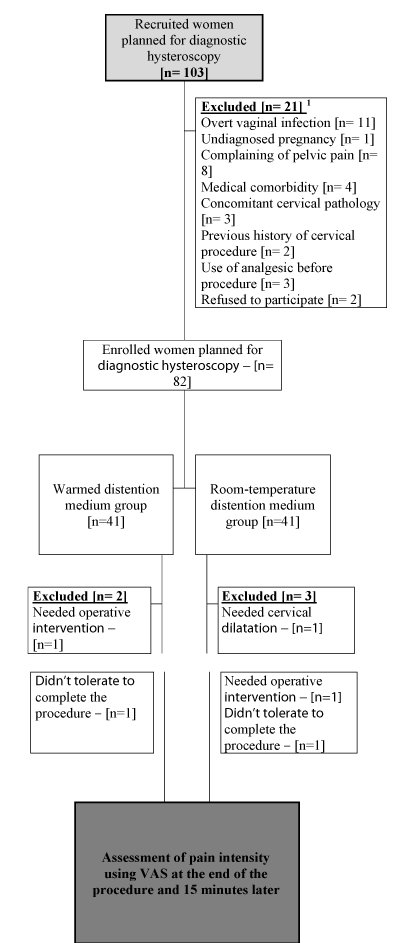
It should be noted the considerable overlap in the causes of exclusion in the recruited women, e.g. some women were excluded due to both medical comorbidity and use of analgesics.
Analysis of the Demographic, Clinical and Hysteroscopic Characteristics of the Study Groups
Basic demographic and clinical features of the research study categorical groups No statistically significant differences were displayed between both research groups as regards age, BMI, parity or history of previous uterine surgeries (table 1).
Table 1 and figure 1 reveal and display the following research data indices and parameters as regards demographic characteristics in both research groups as there was no statistically significant difference (age, BMI, parity previous uterine surgeries p values = 0.24, 0.38, 0.21, 0.74 consecutively).
Hysteroscopic characteristics of the study groups
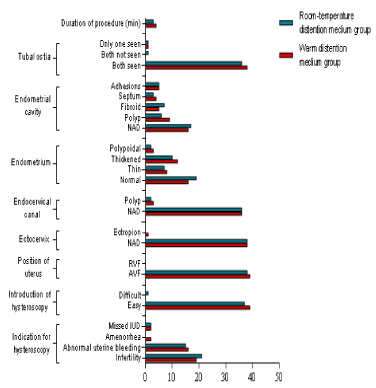
No statistically significant differences were displayed between the two research groups about the indication for hysteroscopy. Hysteroscopic findings didn’t differ significantly between the two groups, namely ease of introduction of hysteroscope, position of uterus and morphological appearance of the ectocervix, endocervical canal, endometrium, endometrial cavity and tubal ostia. Also, no statistically significant differences were observed between the two groups in the duration of procedure.
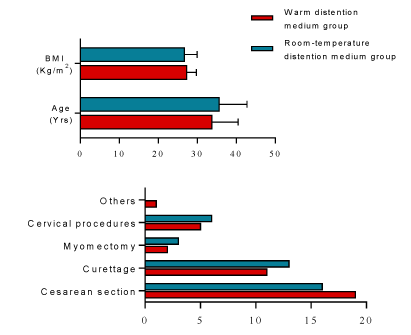
Table 2 and figure 3 reveal and display the following research data parameters and indices as regards the hysteroscopic characteristics in both research groups and there was no statistically significant difference between both research groups (indication of hysteroscopy, introduction of hysteroscopy, ectocervix features, endocervix features, endometrium endometrial cavity, tubal ostia visualization and duration of procedure p values = 0.54, 0.49, 0.98, 0.96, 0.87, 0.89, 0.59, 0.06 consecutively).
Analysis of the parameters of pain assessment in the study groups
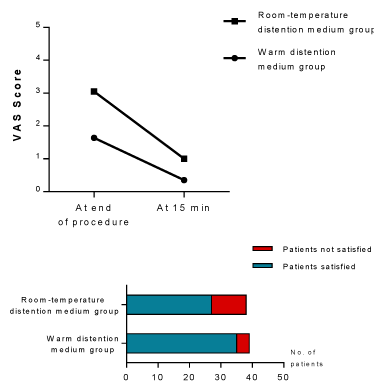
Parameters of pain assessment differed statistically significantly between the two research groups p value < 0.001.Simple analysis of VAS scores revealed a statistically significantly lower VAS score at the end of the procedure in the warm distention medium group in comparison to the room-temperature distention medium group. The same finding remained constant after 15 minutes from the end of the procedure. Assessment of variation of VAS score with combined variation of temperature of distention medium over time was assessed using repeated measure ANOVA analysis. Overall, VAS scores were statistically significantly lower over time in the warm distention medium group in comparison the room-temperature medium group, i.e. significant temperature-time interaction. Detailed factorial analysis revealed a statistically significant effect for the temperature of the distention medium on the VAS score (between-subject effect) where VAS score were statistically significantly lower in the warm distention medium group compared to the room-temperature distention medium group. Also, a statistically significant impact of time elapsed after the procedure on the VAS score (within-subject effect) was noted; with VAS scores statistically significantly lower at 15 min after the procedure compared to immediately after it (p value < 0.001). Patient satisfaction, indicated by the proportion of the patients who would undergo the hysteroscopic examination again by usage of same method, was statistically significantly higher in the warm distention medium research group in comparison to the room-temperature medium research group (89.74% vs 71.05% consecutively) (p value < 0.04).
Table 3 and figure 4 reveal and display a statistical comparison of research data between both research groups as regards VAS scoring at end of procedure and 15minutes later, and patient satisfaction revealing statistically significantly higher levels of the previously mentioned parameters in warm distension group (p values < 0.001, < 0.001, 0.04, consecutively).
Discussion
The aim of the current research study is to compare the degree of pain during an outpatient hysteroscopic examination conducted without anesthesia, by usage of saline solution that had previously been warmed to 37.5°C as the distention medium in the study research group and saline solution at room temperature in the control research group. It was hypothesized that warmed saline solution would cause less discomfort to cases since its temperature would be close to body temperature, thereby diminishing the uterine contractile responsiveness and, therefore, the colic. To test this hypothesis, a total cohort of 82 women planned for diagnostic outpatient office hysteroscopy in the Early Cancer Detection Unit in Ain Shams Maternity University Hospital in the period between May 2017 and May 2018 were recruited in the research study and randomized to either warm- or room-temperature distention medium groups where normal saline solution either warmed in a thermostatically controlled incubator to a temperature of 37.5°C or stored at room temperature kept by an air conditioning system at 28°C respectively was used. Hysteroscopy was performed using standard vaginoscopy technique by the same examiner (a senior gynecologist) in both groups. The degree of pain that the patient feels in the procedure was estimated by using Visual Analogue Scale (VAS) at the end of the procedure and 15 minutes after the examination.
No statistically significant differences were found between both groups in any of the studied confounding variables, including age, BMI, parity, history of previous uterine surgeries, hysteroscopic findings or duration of procedure.(p values = 0.24, 0.38, 0.21, 0.74 consecutively).
Overall, VAS scores were statistically significantly lower over time in the warm distention medium group in comparison to the room-temperature medium group (p value < 0.001). Also, patient satisfaction, indicated by the proportion of the patients who would undergo the hysteroscopic examination again using the same method, was statistically significantly higher in the warm distention medium group in comparison to the room-temperature medium group (89.74% vs 71.05% respectively) (p value = 0.04).
Novel approaches that avoid great degrees of pain have emerged involving the vaginoscopy examination technique, which does not implement usage of speculum and cervical grasping forceps; and the usage of optics and instruments of smaller caliber. Implementation of paracervical block or anesthetic sprays didn’t effectiveness in reducing pain during hysteroscopic examination procedure. It has even been reported that paracervical block causes greater discomfort. Additionally, it most likely could not block all nociceptive stimuli from equipment introduction and from all of the possible intrauterine manipulations [16-18].
When physiologic saline solution is the distensibility medium, it is used at room temperature. It is possible that colic triggered by uterine contractility could be provoked by cooler temperatures, which is considered hostile to the endometrial cavity. With this explanation, cold solutions have been implemented for management endometritis, thereby causing an increase in the potassium cellular gradient and causing uterine contractility, with the intention of keeping the antiseptic solution within the endometrial cavity and enhancing the process of repair [19,20].
Unfortunately, the published literature covering the various impact of temperature levels of hysteroscopic distensibility media is scarce and that point particularly isn’t even mentioned in the BSGE/ESGE guideline of management of fluid distention media in operative hysteroscopy published in October 2016 [3,4,6,9].
In a prior research study, 3-armed stratified, single-blinded randomized control trial of cases undergoing operative hysteroscopy in the OR under IV sedation. 48 patients were randomized to normal saline fluids bags as follows: Arm 1- at room temperature (22°C), or Arm 2- bags pulled from a warming cabinet set at 40°C and left to hang in ambient OR temperature during the case, or Arm 3- using a fluid management system that can maintain the warmed fluid distention medium continuously at 40°C. No significant differences were found between the 3 groups regarding self-assessed pain scores. Contradicting to current research, Salazar et al. recruited patients undergoing operative hysteroscopy in the OR under IV sedation. It’s obvious that IV sedation might have precluded subjective pain assessment by the patients. In addition, the chosen warm temperature of 40°C is far from the physiological body temperature [11,12,14].
In the same issue a research study in 2010, recruited 64 women undergoing hysteroscopy and have been randomized into two research groups. In the control research group, the hysteroscopic examination was conducted by usage of physiologic saline solution at room temperature, and in the test research group, the examination was conducted by usage of a distention medium that have been previously warmed to 37.5°C. The primary research outcome was the severity of pain evaluated by implementing a visual analog scale, 3 points of time: during the examination and at 1 and 15 minutes after the procedure, and the secondary research outcomes assessed and evaluated were the level of acceptability of the hysteroscopic examination procedure by the patient and the time interval required to conduct the procedure .Immediately after the examination, mean (SD; 95% confidence interval) pain intensity in the warmed saline solution group was 3.84 (2.71; 2.89-4.79), and in the room-temperature saline solution group was 4.31 (3.02; 3.18-5.44) (p = 0.51). At 1 and 15 minutes after the procedure, pain intensity in the 2 groups was, respectively, 2.41 (2.00; 1.66-3.16) and 2.43 (2.49; 1.57-3.30) (p = 0.96), and 1.83 (2.30; 1.02-2.64) and 1.85 (2.06; 1.08-2.62) (p = 0.96). Differences were not statistically significant. On the other hand, the research team reported that: Cases reported a better feeling of comfort with the saline solution warmed to 37.5°C, but this was not proven via the research variables assessed and investigated. Although there was less feeling of discomfort when the temperature of the saline solution in contact with the vaginal wall was closer to body temperature, this did not affect the outcome of the research study, which is, the level of pain perceived during and after the examination [16,18,19].
Another randomized clinical research trial., recruiting 184 women, for diagnostic hysteroscopy, study subjects were randomized to be submitted to hysteroscopy via vaginoscopy by usage of normal saline at 36°C as distension medium with no speculum or cervical grasping, or by the traditional technique with CO2. The mean VAS pain score was 1.60 in the warm saline technique and 3.39 in the traditional technique (p < 0.001). Lower pain scores were also observed after 5, 10 and 15 minutes (p < 0.001) as well as after 20 minutes (p = 0.056). These results are comparable to the results of our study (mean VAS score at the end of procedure in the warm distention medium group 1.64 ± 0.82) [7,10,15,20].
It’s revealed in the current research study that the implementation of saline solution warmed to 37.5°C have caused lower levels of pain due the lower triggering stimulus for uterine contractions . On the other hand, it is remarkable that the temperature of the distention medium is not the only trigger for pain during hysteroscopic examination and other stimuli may trigger pain in addition. The hysteroscopic examination is performed by inserting a rigid device via the uterine cervix. Due of the cervical innervation, it has a painful response to the manipulative action within the uterus, due to insertion of the instrument via the cervical canal or due to traction .Pain during hysteroscopic procedures is additionally linked to uterine cavity distention . The pressure exerted to cause this distention is probably more significant than the temperature of the distensibility medium. These latter painful stimuli clearly do not depend on the temperature of the distention medium used and also may be modified by underlying uterine pathologies, e.g. cervical inflammation or uterine fibroids. It might be recommended - based upon the previous results - the use of warmed saline distention medium during diagnostic hysteroscopy to lower the pain experienced by the patients [1,4,9].
The current research study however has some limitations. First, it was conducted with a small sample in a single institution. Second, warmed saline distention medium was not assessed in lengthy painful operative hysteroscopic interventions. Anatomical variabilities in uterine dimensions should be considered in future research efforts that could aid in predictability clinical models for pain provocation in hysteroscopic examination as an office procedure.
Conclusion
Pain is measured by VAS score is significantly lower at the end of the procedure in warm saline distension medium group compared to room temperature distension medium group (1.64 + 0.82 vs 3.05 + 1.17) respectively. The same finding also after 15 minutes of the end of the procedure (0.35 + 0.57 vs 1.05 + 0.81) respectively in warm saline distension medium group and room temperature saline distension medium group. Patient satisfaction, indicated by the proportion of the patients who undergo hysteroscopic examination again using the same method, was significantly higher in warm saline distension medium group. The result was (89.74% vs 71.05 %) respectively in warm saline distension medium group and room temperature saline distension medium group. Time taken to complete the procedure in minutes is not significantly different and the result was (2.0-8.0 vs 1.6-9.0 minutes) respectively in warm saline distension medium group and room temperature saline distension medium group.
Recommendations
Usage and implementation of warm saline (37.5°) as distension media instead of room temperature saline since warm saline reduce pain at the end of the procedure and 15 minutes after the end of the procedure. More studies with large sample size and different situations is required taking into account uterine dimensional differences that could be assessed by usage of 3D sonographic technology in future research trials.
- Gaspare Carta, Patrizia Palermo, Franco Marinangeli, Alba Piroli, Stefano Necozione, Valentina De Lellis, et al. Waiting time and pain during office hysteroscopy. J Minim Invasive Gynecol. 2012; 19: 360-364. https://goo.gl/wTyLnj
- Ettore Cicinelli. Hysteroscopy without anesthesia: review of recent literature. J Minim Invasive Gynecol. 2010; 17: 703-708. https://goo.gl/gZrozc
- Cooper NA, Khan KS and Clark TJ. Local anaesthesia for pain control during outpatient hysteroscopy: systematic review and meta-analysis. BMJ. 2010; 23: 1130.
- Da Costa AR, Pinto Neto AM, Amorim M, Paiva LH, Scavuzzi A, Schettini J. Use of misoprostol prior to hysteroscopy in postmenopausal women: a randomized, placebo-controlled clinical trial. J Minim Invasive Gynecol. 2008; 15: 67-73. https://goo.gl/sMLMqN
- De Freitas Fonseca M, Sessa FV, Resende JA, Guerra CG, Andrade CM, Crispi CP. Identifying predictors of unacceptable pain at office hysteroscopy. J Minim Invasive Gynecol. 2014; 21: 586-591. https://goo.gl/MPAeLt
- Bettocchi S, Nappi L, Ceci O, Selvaggi L. What does ‘‘diagnostic hysteroscopy mean today?’’ the role of the new techniques. Curr Opin Obstet Gynecol. 2003; 15: 303-308. International Association of the Study of Pain (IASP): World Congress on Pain. 2012. https://goo.gl/xbpqLn
- Jo YY, Jeon HJ, Choi E, Choi YS. Extreme hyponatremia with moderate metabolic acidosis during hysteroscopic myomectomy - a case report. Korean J Anesthesiol. 2011; 60: 440-443. https://goo.gl/TtWh3R
- Pati Ranjit Kumar, Samal Soumya, Pattnaik Shaswat Kumar, Jena Saubhagya Kumar. The Effectiveness of Intravenous Tramadol Hydrochloride and Diclofenac Sodium as Postoperative Analgesia. Int J Pharm Sci Rev Res. 2016; 36: 260-263.
- Petrozza J, Attaman J. Hysteroscopy. https://goo.gl/5C1Dgx
- Pluchino N, Ninni F, Angioni S, Artini P, Araujo VG, Massimetti G. Office vaginoscopic hysteroscopy in infertile women: effects of gynecologist experience, instrument size, distension medium on patient discomfort. J Minim Invasive Gynecol. 2010; 17: 344-50. https://goo.gl/hG199Q
- Romani F, Guido M, Morciano A, Martinez D, Gaglione R, Lanzone A. The use of different size-hysteroscope in office hysteroscopy: our experience. Arch Gynecol Obstet. 2013; 288: 1355-1359. https://goo.gl/P1exbT
- Royal College of Obstetricians & Gynecologists. Hysteroscopy, best practice in outpatient (Green top Guideline no.59). 2011. https://goo.gl/icq3jC
- Salazar CA, Wong MC, Morris SN, et al. A comprehensive review of Asherman's syndrome: causes, symptoms and treatment options. Curr Opin Obstet Gynecol. 2017; 29: 249-256. https://goo.gl/NNSN9e
- Sameer Umranikar, T. Justin Clark, Ertan Saridogan, Dimitrios Miligkos, Kirana Arambage, Emma Torbe, et al. BSGE/ESGE guideline on management of fluid distension media in operative hysteroscopy. 2016; 13: 983.
- Shahid A, Pathak M, Gulumser C, Parker S, Palmer E, Saridogan E. Optimum uterine filling pressure for outpatient diagnostic hysteroscopy: a double-blind, randomized controlled trial. Reprod Biomed Online. 2014; 28: 86-91. https://goo.gl/qLHziN
- Shereef M. Zayed, Khaled A. Elsetohy, Mohamed Zayed, Usama M. Fouda. Middle East Fertility Society Journal. 2014.
- Siristatidis C, Chrelias C, Salamalekis G, Kassanos D. Office hysteroscopy: current trends and potential applications: a critical review. Arch Gynecol Obstet. 2010; 282: 383-388. https://goo.gl/gc1JWz
- Sothic N, Chaturvedi R and Kumar K. Operative hysteroscopy intravascular absorption syndrome: a bolt from the blue. Indian J Anaesth. 2012; 56: 179-182. https://goo.gl/f9HqU9
- Zares MM, Rosangela P, Helio LF. Brazilian Journal of Gynaecology and Obstetrics. Evaluation of pain in diagnostic hysteroscopy by vaginoscopy using saline solution at body temperature as a means of distension. Randomized clinical trial. 2013. 1806-9339.
- Alessandra Evangelista, Marco Aurelio P. Oliveira, Claudio P. Crispi, Marcio F. Lamblet Thiers, S. Raymundo, Luis Carlos Santos. Diagnostic Hysteroscopy Using Liquid Distention Medium: Comparison of Pain with Warmed Saline Solution vs Room-Temperature Saline Solution. Journal of Minimally Invasive Gynecology. 2011; 18: 104-107. https://goo.gl/Qacspz
Sign up for Article Alerts