Topical Analgesia: Transdermal or ‘Intradermal’ Mechanisms of Action??
Jan M. Keppel Hesselink1* and David J. Kopsky2
1Institute for Neuropathic Pain, Bosch en Duin, the Netherlands
2Institute for Neuropathic Pain, Amsterdam, the Netherlands
*Address for Correspondence: Jan M. Keppel Hesselink, Institute for Neuropathic Pain, Bosch en Duin, the Netherlands, Tel: +31-6-51700527; E-mail: [email protected]
Submitted: 03 October 2017; Approved: 02 November 2017; Published: 04 November 2017
Citation this article: Keppel Hesselink JM, Kopsky DJ. Topical Analgesia: Transdermal or ‘Intradermal’ Mechanisms of Action?. Sci J Neurol Neurosurg. 2017;3(3): 068-071.
Copyright: © 2017 Keppel Hesselink JM, et al. This is an open access article distributed under the Creative Commons Attribution License, which permits unrestricted use, distribution, and reproduction in any medium, provided the original work is properly cited
Keywords: Topical; Transdermal; Analgesia; Amitriptyline; Phenytoin; Neuropathic; Pain
Download Fulltext PDF
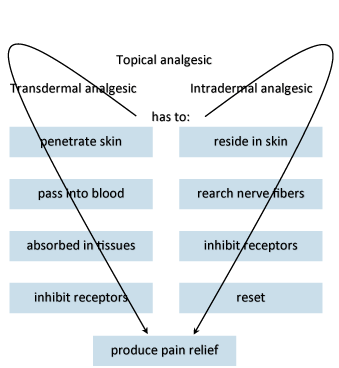
Topical analgesics are recommended in guidelines for treating the pain of both osteoarthritis and neuropathy. Topical analgesics are defined as therapies applied to body surfaces to treat pain, and are either rubbed onto the skin or made into patches or plasters that are adhered onto the skin. Under the header of topical analgesics, we find both transdermal as well as intradermal formulations. This differentiation in terminology is recommendable, as transdermal topicals act via adequate drug concentrations in the blood, while intradermal formulations act via mechanisms in the skin and do not need to penetrate into the blood. This will be demonstrated based on examples of amitriptyline and phenytoin gels and creams.
Introduction
The topical treatment of pain has its roots in ancient times, and we can well understand that the Neolithic man already applied plasters and herbs onto the skin to relieve pain and to stimulate wound healing [1]. Opium formulations have also been used for centuries, for instance as embrocation for indications such as ‘asthenic pains’ up to the nineteenth century [2].
Interestingly, the definitions of topical analgesics are scarce. In 2017 in a Cochrane analysis it was defined as: “A topical analgesic medication is one applied to body surfaces such as the skin or mucous membranes to treat painful ailments; they are either rubbed onto the skin or made into patches or plasters that are stuck onto the skin” [3]. Formulations purely acting via compartments of the skin, such as capsaicin and menthol creams, as well as transdermal formulations acting via the building up of sufficient plasma levels, both qualify as ‘topical analgesic formulations’. While plasters for instance may contain opioids aimed at creating a steady-state plasma level to suppress pain, plasters containing capsaicin act only as an excitotoxin and destroy nociceptive terminals; no plasma level of capsaicin is required [4].
Based on these two examples, we will distinguish the difference between topical formulations acting via localized mechanisms in the skin (intradermal), and topical formulations acting via systemic exposure of the drug (transdermal). We would therefore like to differentiate between transdermal and intradermal formulations containing analgesics, both of which act via topical formulations. In (Table 1) we have listed a number of properties of both formulations. Although there are clear differences, for certain transdermal formulations a topical intradermal mechanism of action cannot be ruled out. If an Active Pharmaceutical Ingredient (API) in a certain transdermal formulation penetrates the skin, and subsequently the plasma level of the API rises, a certain concentration of the selected API will reside for a while in the various skin compartments and might possibly influence cells and tissues of the skin if the transdermal formulation is applied to the localization where pathology resides. This does not hold true for buprenorphine and fentanyl plasters, as these are not applied on the skin where the ‘pain resides’. If however, transdermal applications are used for the treatment of localized pain, it will not be easy to differentiate between the contribution to the overall analgesia via the blood, or via the skin compartments such as the nociceptors, the immune-competent cells and the keratinocytes of the epidermis [5]. Moreover, there is limited literature on the relation between the plasma levels of various (co-)analgesics and their analgesic effects. This is probably due to the fact that most (co-)analgesics are off patent and no budgets are allocated for such studies.
Topical Amitriptyline and Phenytoin
Topical amitriptyline was initially developed explicitly as a transdermal formulation only. In 1990, a paper was published evaluating the transdermal (percutaneous) absorption of the tricyclic antidepressants amitriptyline and imipramine and their N-desmethylated analogs, nortriptyline and desipramine, in an experimental mouse model for human skin.6 The rationale for the study was to ensure a constant administration of the drug and to bypass the gastrointestinal tract in order to reduce gastrointestinal side effects. For each drug, 2 mg in a solution was applied topically to the backs of mice. This led to concentrations in the brain ranging from 140 to 8240 nmol/Kg and blood ranging from 89 to 3810 nmol/L [6]. The authors pointed out that the concentrations in the blood resembled low therapeutic to toxic levels in humans.
In 1999, a psychiatric case was presented where a transdermal gel was compounded containing amitriptyline. The authors claimed that transdermal delivery of amitriptyline must be possible due to its lipophilic nature and large volume of distribution, but at that time there were no data available regarding such transdermal formulation. They were unable to identify any reports describing the release of amitriptyline from a transdermal base [7]. They compounded a transdermal amitriptyline gel based on a Pluronic Lecithin Organogel (PLO) base. The lecithin organogel base was selected, the authors pointed out, because of its properties to carry APIs through the skin. The final formulation contained amitriptyline 7.5% gel, and every day 2 ml was applied on the skin [8]. The serum amitriptyline and nortriptyline concentrations after the application of the gel were within the therapeutic range (for depression) defined as 50-250 ng/mL. A continuous release of amitriptyline from the formulation was demonstrated over a 24-hour administration period. In addition, the authors pointed out that in 1997 clinical relevant sedation was reported in several patients treated with doxepin 5% cream, licensed as itch treatment [9]. This also suggested at that time that the transdermal route of the applied tricyclic anti-depressant results in clinically significant serum drug concentrations. The authors thus found clinically relevant plasma levels after administrating a PLO gel containing 150 mg amitriptyline per application. Other experiments in cats resulted in levels below the limit of detection (< 4.6 ng/mL) of amitriptyline after the application of 5% amitriptyline in PLO gel, with a fixed daily dose of 5 mg per application, thus 0.1 mL [10]. This might be due to the amount of amitriptyline residing in the skin, in a different skin compared to humans, or due to a different formulation. The exact way to formulate the amitriptyline PLO gel however was not described, and small pharmaceutical differences in preparing may have an impact on the properties of the final formulation. Such small differences may therefore lead to either clinical effective dose levels or levels smaller than the no-effect dose.

The potential analgesia of a 45% water/45% isopropanol/10% glycerin solution containing amitriptyline on human skin was explored in a dose range study, selecting 3 different doses of 0.3 mL versus vehicle: 10 mmol/L (3.4%, 0.9 mg), 50 mmol/L (16.9%, 4.7 mg), and 100 mmol/L (33.8%, 9.4 mg) [11]. The authors documented clear and statistically significant analgesic effects of amitriptyline at concentrations of both 50 and 100 mmol/L, compared with the effects of placebo and 10 mmol/L. Unfortunately they did not measure the plasma drug levels. The same formulation was also tested in a different study with a maximum of 82.4 mg amitriptyline applied on the skin (1.5 mL of 8.4%, 16.9% and 33.8%), and in that study the drug levels were determined: the blood sample analysis did not show plasma levels of amitriptyline and nortriptyline that were higher than the detection threshold of 2 ng/mL. Thus, the formulation tested did not lead to the systemic absorption of amitriptyline, and the documented analgesic effects must have been caused by intradermal, most probably epidermal located mechanisms [12].
In our clinic for neuropathic pain, we have treated patients for many years with amitriptyline 5% and 10% cream.8 We selected a specific base cream and did not use PLO gel because we wanted to minimize the transdermal penetration of the drug in order to avoid systemic side effects. Furthermore, we brought forward a new hypothesis based on three different and cross-talking epidermal targets for peripheral neuropathic pain, the nociceptors, the keratinocytes and the immune-competent cells.5 In order to downregulate these epidermal targets, transdermal penetration is not required and perhaps even not advisable. In most of our patients we indeed did not find any indication for systemic side effects, but patients reported sufficient analgesia. This suggests low or absent transdermal penetration of amitriptyline via the selected base cream. At that time, we were looking for a lipophilic compound with a molecular weight below 500 Dalton, a small molecule, potentially resulting in greater efficacy and started with the application of phenytoin. In order to test for systemic absorption of lipophilic analgesics in the selected base cream, we assessed phenytoin plasma levels after the application of 10% phenytoin cream in 16 patients. Nearly all of the sampling was done 2-3 hours after application, in order to sample close around the estimated T-max. Phenytoin could not be detected in the plasma in any of the samples. These patients experienced a clinically relevant pain reduction after the application of the cream, a pain reduction mostly around 50% or more, starting within 30 minutes and lasting for 4-24 hours. We also documented such a fast onset of action in many of our patients treated with amitriptyline 5% or 10% cream. This would also be quite suggestive for a non-systemic mode of action.
Conclusion
Transdermal and intradermal formulations of (co-)analgesics such as amitriptyline, phenytoin, as well as baclofen, ketamine, clonidine and such compounds act via different mechanisms of action. Transdermal formulations are developed to lead to detectable and effective plasma levels of the API, while intradermal formulations are developed to create sufficient levels of the selected API in the skin compartments itself, minimizing systemic absorption. In the first case, peripheral and central mechanisms of action will contribute to the desired effects, and hand in hand with the resorption in the blood, systemic side effects, drug interactions and abuse potential cannot be ruled out. In case of intradermal formulations, the mechanism of action resides in the skin, and the systemic resorption is low or absent leading to levels of the selected APIs below the limit of detection. It seems advisable to use topical analgesics as a container category for both transdermal as well as intradermal acting topicals. Currently, transdermal and topical analgesics are often seen as the same. This is undesirable, as we have pointed out in this article.
Conflict of Interest
Authors are patent holders of two patents related to the topical formulations of phenytoin in the treatment of pain: 1) Topical phenytoin for the use in the treatment of peripheral neuropathic pain and 2) Topical pharmaceutical composition containing phenytoin and a (co-)analgesic for the treatment of chronic pain.
- Finch PM, Drummond PD. Topical treatment in pain medicine: from ancient remedies to modern usage. Pain Manag. 2015; 5: 359-371. https://goo.gl/f2BbW1
- Porter R. Drugs and Narcotics in History: Cambridge University Press. 1995. https://goo.gl/oHZTzs
- Derry S, Wiffen PJ, Kalso EA, Bell RF, Aldington D, Phillips T, et al. Topical analgesics for acute and chronic pain in adults - an overview of Cochrane Reviews. Cochrane Database Syst Rev. 2017; 12: CD008609. https://goo.gl/KSu9tM
- Szallasi A, Blumberg PM. Vanilloid (Capsaicin) receptors and mechanisms. Pharmacol Rev. 1999; 51: 159-212. https://goo.gl/tio2Qz
- Keppel Hesselink JM, Kopsky DJ, Bhaskar AK. Skin matters! The role of keratinocytes in nociception: a rational argument for the development of topical analgesics. J Pain Res. 2016; 10: 1-8. https://goo.gl/9a4stw
- Bailey DN. Percutaneous absorption of tricyclic antidepressants: amitriptyline, nortriptyline, imipramine, and desipramine. J Anal Toxicol. 1990; 14: 217-218. https://goo.gl/aASuJX
- Scott MA, Letrent KJ, Hager KL, Burch JL. Use of transdermal amitriptyline gel in a patient with chronic pain and depression. Pharmacotherapy. 1999; 19: 236-239. https://goo.gl/oNiyJt
- Kopsky DJ, Hesselink JM. High doses of topical amitriptyline in neuropathic pain: two cases and literature review. Pain Pract. Feb 2012; 12: 148-153. https://goo.gl/g8daWV
- Sabroe RA, Kennedy CT, Archer CB. The effects of topical doxepin on responses to histamine, substance P and prostaglandin E2 in human skin. Br J Dermatol. 1997; 137: 386-390. https://goo.gl/Sth1ze
- Mealey KL, Peck KE, Bennett BS, Sellon RK, Swinney GR, Melzer K, et al. Systemic absorption of amitriptyline and buspirone after oral and transdermal administration to healthy cats. J Vet Intern Med. 2004; 18: 43-46. https://goo.gl/d4H9ao
- Gerner P, Kao G, Srinivasa V, Narang S, Wang GK. Topical amitriptyline in healthy volunteers. Reg Anesth Pain Med. 2003; 28: 289-293. https://goo.gl/hXSoK1
- Duale C, Daveau J, Cardot JM, Boyer-Grand A, Schoeffler P, Dubray C. Cutaneous amitriptyline in human volunteers: differential effects on the components of sensory information. Anesthesiology. 2008; 108: 714-721. https://goo.gl/wSVhRb
Sign up for Article Alerts