Minimally Invasive Wireless Neuromodulation: A Promising Effective and Safe Alternative to Opioids in the Management of Chronic Back Pain?
Laura Tyler Perryman*
Stimwave Technologies Incorporated, USA
*Address for Correspondence: Laura Tyler Perryman, Stimwave Technologies, Inc. 1310 Park Central Blvd South, Pompano Beach, Florida 33064, USA, Tel: 800-965-5134; E-mail: [email protected]
Submitted: 22 August 2019; Approved: 23 September 2019; Published: 24 September 2019
Citation this article: Laura Tyler Perryman. Minimally Invasive Wireless Neuromodulation: A Promising Effective and Safe Alternative to Opioids in the Management of Chronic Back Pain. Am J Anesth Clin Res. 2019;5(1): 022-026.
Copyright: © 2019 Laura Tyler Perryman. This is an open access article distributed under the Creative Commons Attribution License, which permits unrestricted use, distribution, and reproduction in any medium, provided the original work is properly cited
Download Fulltext PDF
Background: Chronic pain is a common symptom among patients seeking medical help and back pain affects millions of Americans every year. The protocol at present indicates medical managements for both acute and chronic back pain. Opioids are among the common pain medications prescribed at present.
Material and Methods: Literature review regarding opioid menace and introduction to the new novel wireless technology called “Minimally Invasive Micro-stimulator” for Spinal Cord Stimulation (SCS) and Peripheral Nerve Stimulation (PNS).
Results: Center for Disease Control (CDC) reports alarming increases in mortality related to drug overdose and prescription drug abuse, especially opioids; 47,600 out of 70,237 (67.8%) drug overdose deaths in 2017 involved opioids. On the other hand, opioids did not offer effective relief when prescribed for chronic back pain or acute back pain. They only caused serious adverse events and in a Canadian survey over 50% deaths related to medication toxicity. With postoperative use over 9% patients developed opioid related complication, which increased hospital costs by 29% with a 55% extended hospital stay. Wireless SCS or PNS on the other hand are minimally invasive procedures wherein only one Implantable Neural Stimulator (INS) is percutaneously placed for neural stimulation. This INS has capabilities to access an externally placed pulse generator by wireless means to induce stimulation. In several patients this “Minimally Invasive Stimulator” was shown to be effective in the management of chronic pain with very few adverse events. In a recently published prospective randomized controlled trail benefits of the single stage implantation of a single INS provided effective pain relief in nearly 90% patients with low back pain as well as leg pain using both high frequency and low frequency stimulation ranges.
Conclusion: Opioids delay recovery of patients with low back pain while additional adverse events increase the morbidity and mortality. Wireless neuromodulation (SCS and PNS) by “Minimally Invasive Stimulator” appears to be safe and effective in chronic back pain management and worthy of its application in the early stages itself. Thus, excluding prescription opioids, altogether in pain management, can mitigate the mortality and morbidity associated with these addictive drugs.
Introduction
Chronic pain is a common symptom and in the United States alone, about 100 million people in 2016 reportedly suffered from pain, either chronic or acute, necessitating consumption of opioids for relief in health care facilities or at home [1]. Apart from being potent analgesics, Opioids have serious consequences on several systems, especially the central nervous system and gastrointestinal tract. Morbidity was not the only serious concern related to these opioid use, but serious mortality has been reported, recently, following abuse or overdose of opioids [2-6].
In January 2019, Scholl et al released the data analysis on opioid related overdose deaths in the United States between 2013 and 2017 [7]. According to this CDC report 47,600 out of 70,237 (67.8%) drug overdose deaths in 2017 involved opioids. Between 2013 and 2017, synthetic opioids contributed to increases in the drug overdose death rates in several states and in 1 year alone (2016-2017) there was a 45.2% increase in these deaths.
This presentation particularly aims to bring out the alternatives available in the management of chronic pain in the form of wireless neuromodulation. To emphasize the utility of Wireless Spinal Cord Stimulation (WSCS) or Peripheral Nerve Stimulation (WPNS) for its safety and efficacy there is need to point out the opioid menace in back pain management.
In 2011, Deyo, et al. reported that over 2% of adults in the US, reported use of opioids on regular basis on prescription: over 50% of them were suffering from back pain [8].
Other reports also suggested that most of these patients using prescription opioids were suffering from chronic back pain, usually refractory to the non-opioid medication. In spite of the paucity of reports on the safety or efficacy of long-term usage of opioids in back pain, prescriptions have rapidly increased in the treatment of acute low back pain resulting in the opioid menace [9]. Additionally, Bawor et al. found out that more than 50% of women and about one-third of men were introduced to opioids by prescription alone (particularly Methadone) to start with [10]. Contrary to the expectations, opioids not only failed to provide the required pain relief, but exposed these patients with acute low back pain, to the risk of habituation/adverse events/further delays in recovery [11]. Opioid toxicity was responsible for 58% of mortality in medication-related deaths in a Canadian Survey [12]. Maladi et al. also made an interesting observation that the route of administration changed from oral to nasal inhalation or to parenteral especially in the social gatherings, exponentially increasing the drug consumption in both cancer and non-cancer patients [12].
Opioids and their effect on outcome following spine surgery
One among the common painful conditions requiring opioid prescription is back pain, even though the outcome in terms of relief or functionality remain controversial. One year following spine surgery, results were evaluated by Hills et al in patients who received opioids preoperatively. Those with chronic opioid usage before surgery failed to reach satisfactory outcome goals; instead they were prone to have higher risk of opioid-dependency as well as increased risk for complications at 90-day review [13].
Abdel Shaheed in their systematic review of 3419 patients with low back pain, disclosed that only modest pain relief was obtained with the recommended dosage that was short-living. Authors also concluded that there was no evidence that long-term opioids could provide sustainable relief and it is unknown if they are useful in acute low back pain even [14].
In the dreadful scenario of opioid addiction and adverse events including death, alternative management strategies are very much indicated. Apart from regulating the usage of prescription opioids outside or inside the hospitals, safe and minimally invasive techniques have to be encouraged. Neuromodulation approaches do not involve systemic consumption of drugs which could produce complications of several systems like the CNS or GI tract. At present, minimally invasive technology is available with possibly no systemic complications or prolonged hospital stay.
Wireless neuromodulation and chronic back pain
More than 90 million Americans reportedly suffer from chronic pain and possibly could end up consuming prescription opioids on long-term basis. Alternatives to failed conservative treatment were not available until neuromodulation by electrical stimulation of neural tissues was introduced successfully applying the Gate-Control theory [15,16]. These neuromodulation devices deliver stimulation to the electrically excitable tissues and among the various methods currently in use, Spinal Cord Stimulation (SCS), Peripheral Nerve Stimulation (PNS) and Dorsal Root Ganglion Stimulation (DRGS) gained popularity over the past four decades with established cost-effectiveness as well as safety [17-20].
The technology has been evolving rapidly in order to curtail the adverse events or failures resulting from the conventional equipment that includes implantation of several components, most notably an Implantable Pulse Generator (IPG) with its long connection cables.
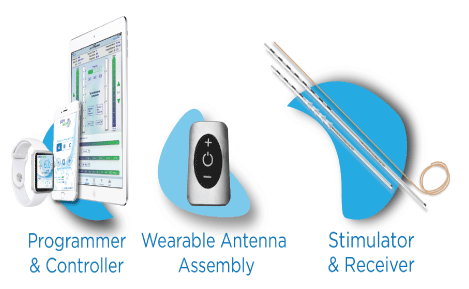
A wirelessly-powered, battery-free Implantable Neural Stimulator (INS) provides a truly minimalistic approach both in technology and technique. This new technology involves application of an external Wireless Power Generator (WPG) that has a dipole antenna using microwaves (very short length pulses electromagnetic waves at Giga Hertz frequencies (GHz) for electric field coupling. The INS device (Stimwave Technologies, Pompano Beach, Florida) is powered by radiative electric field coupling through tissues at the above described microwave frequencies (unlike the low frequencies of 100-500 KHz employed by the conventional implants) that enable smaller sized implants to be placed even at deeper tissue planes. By virtue of the electromagnetic waves in use, the technology offers minimal loss of power with much better energy transfer across the tissues [21]. These micro-implants with 800-1350 µm diameter are of significantly smaller in size compared to the bulk of the traditional implants that come with multiple components. This INS includes nano-electronics on the lead itself with a passive antenna capable of accessing WPG placed outside the patient body. INS can have 4 or 8 contact electrodes and can be a cylinder or a paddle type with a receiver wire mated to it internally for wireless power transfer (Figure 1).

These contacts have independent power and application-specific circuits integrated within the device so as to produce charge-balanced waveforms. Nanotechnology integrated within the INS manage the addressing systems coordinated with the WPG placed externally (Figure 2). In addition to the miniature size of the device, the microwave frequencies applied for the stimulation are much safer and do not damage the cell membranes of the excitable tissues.
Wireless Power Generator (WPG)
This is placed on a fabric in close proximity to the INS, and engages the stimulator according to the parameters required for effective stimulation of the target tissue. WPG utilizes the standard wireless technology of the cellular phones and has an average pulse output power of 1 Watt. It has a Radiofrequency (RF) transmitter that encodes the stimulation waveforms in to signal forms in accordance with the required settings controlled by a microprocessor within (Figure 2,3).
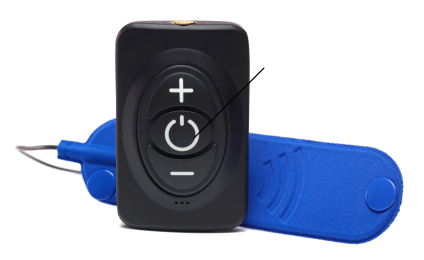
Both patient and clinical practitioner can access the WPG via a controller in the form of a Bluetooth or an App on mobile phone [21].
Discussion
Chronic back pain is a disabling symptom resulting in loss of function as well as working hours that impact the economy. Patients are driven to the use of prescription opioids that may not yield the expected relief but produce several adverse events including addiction and death. Neuromodulation is an effective method to control pain and SCS or PNS have shown cost-effective results. Wireless neuromodulation is much better in its minimalistic approach.
WNM has been clinically in use for several years and affords relief in the forms of SCS, DRG and PNS techniques supported by multiple clinical trials.
The capabilities of the technology makes its application possible in several chronic pain conditions. As shown by Poon et al, the GHz range of the wireless systems offers several potential advantages in biological media [22,23].
The frequencies applied here, reduce the size of the receiver considerably and the tissue depth relationship to the energy transfer was much more efficient. The author (Laura Tyler Perryman) demonstrated in porcine models that the depth at which INS gets implanted had a direct correlation with the effective current density [23,24]. The antenna of the WPG at 915 MHz was able to energize the INS at 12 cm depth, with a 4.3 cm antenna in the animal models.
In clinical settings successful stimulation provided significant pain relief in patients with back pain and leg pain in patients with Failed Back Surgery Syndrome (FBSS) [25]. Treatment of FBSS low back pain with a novel percutaneous DRG [26], post herpetic neuralgia [27], refractory craniofacial pain [28] and Complex Regional Pain Syndrome (CRPS) of upper extremity [29,30]. These patients required implantation of stimulator only, sine the WPG eliminates surgical implantation of the battery inside the body. They never experienced the complications due to either IPG or its appendages while stimulation was successful and efficient. These technological advances translate in to reduced operating time, fewer hospital visits, decreased health care costs and improved cosmetic result to the patient.
Summary
Opioid abuse continues to be a serious threat to public health and safety as continued prescriptions increase with chronicity of pain. Not only the adverse events have been on the rise but there is paucity of literature supporting the effectiveness of opioids in low back pain or any chronic pain syndromes. Synthetic opioids have been reported to be increasingly abused with consequent rise in morbidity and morbidity (Table 1)[31].
In this scenario, alternatives need to be encouraged that offer safety and minimalistic approach.
Wireless approach also called the injectable neuro-stimulation method is one such minimally invasive treatment to control chronic pain. Conventional SCS and PNS have already been established as reliable and cost-effective treatment methods in the management of chronic pain. The minimally invasive WNM is while, devoid of the equipment related complications and adverse events, offers patient-friendly technology.
It has the added advantages owing to the delivery higher frequency stimulation (much wider range of frequencies) that enable miniature implants to be placed at varying depths in close proximity to the neural excitable tissues, percutaneously through a needle. These implants are thus also called minimally invasive micro-stimulators and offer an improved transfer of energy with minimal power loss. They are also less damaging to the cell membranes at the excitable tissues. Stimwave (Stimwave Technologies, Pompano Beach, Florida) implants have been tried in several multicenter clinical trials and the experience has been so far encouraging while adverse events are very limited since there is only one micro-implant (the INS) with wireless capabilities, requires to be placed inside the body. Several studies in larger patient populations have been ongoing at present all over the world. A recent prospective randomized controlled trail was concluded to support the benefits of the single stage procedure with implantation of single INS. Both high frequency and low frequency stimulation ranges provided effective pain relief in nearly 90% patients with low back pain as well as leg pain.
Perspective
Public education about the adverse events, surveillance and monitoring of opioid abuse would reduce the mortality and morbidity of opioids. The regulations at present recommend conservative medical treatment before advising any neuromodulation approach. In view of the technological advancements in neuromodulation the minimalistic approach in the form of a micro-implant can be offered as an alternative to long-term opioids. The adverse events or the hospital costs incurred because of pre or postoperative opioids can be avoided with wireless neuromodulation technology which has promising results so far.
- Stoicea N, Costa A, Periel L, Uribe A, Weaver T, Bergese SD. Current perspectives on the opioid crisis in the US healthcare system. Medicine (Baltimore). 2019; 98: 15245. http://bit.ly/2mFzZLj
- Herzig SJ, Rothberg MB, Cheung M, Ngo LH, Marcantonio ER. Opioid utilization and opioid-related adverse events in nonsurgical patients in U.S. hospitals. J Hosp Med. 2014; 9: 73-81. http://bit.ly/2mheKQ1
- Dart RC, Surratt HL, Cicero TJ, Parrino MW, Severtson SG, Bucher Bartelson B, et al. Trends in opioid analgesic abuse and mortality in the United States. N Engl J Med. 2015; 372: 241-248. http://bit.ly/2ldvEPe
- Kuehn BM. Safety plan for opioids meets resistance: opioid-linked deaths continue to soar. JAMA. 2010; 303: 495-497. http://bit.ly/2mhh3Tb
- Fischer B, Rehm J. Deaths related to the use of prescription opioids. CMAJ. 2009; 181: 881-882. http://bit.ly/2mmFSgf
- Dhalla IA, Mamdani MM, Sivilotti ML, Kopp A, Qureshi O, Juurlink DN. Prescribing of opioid analgesics and related mortality before and after the introduction of long-acting oxycodone. CMAJ. 2009; 181: 891-896. http://bit.ly/2kHZiMd
- Scholl L, Seth P, Kariisa M, Wilson N, Baldwin G. Drug and opioid-involved overdose death United States, 2013-2017. CDC weekly. 2019; 67: 1419-1427.
- Deyo RA, Smith DHM, Johnson ES, Donovan M, Tilloston CJ, Yang X, Petrik A, et al. Opioids for back pain patients: Primary care prescribing patterns and use of services. J Am Board Fam Med. 2011; 24: 717-727. http://bit.ly/2mLQJAN
- Edlund MJ, Martin BC, Devries A, Fan MY, Braden JB, Sullivan MD. Trends in use of opioids for chronic non-cancer pain among individuals with mental health and substance use disorders: The TROUP study. Clin J Pain. 2010; 26: 1-8. http://bit.ly/2kLnr4H
- Bawor M, Dennis BB, Varenbut M, Daiter J, Marsh DC, Plater C, et al. Sex differences in substance use, health, and social functioning among opioid users receiving methadone treatment: A multicenter cohort study. Biol Sex Differ. 2015; 6: 21. http://bit.ly/2l4jfgE
- Sanger N, Bhatt M, Singhal N, Ramsden K, Baptist Mohseni N, Panesar B, et al. Adverse outcomes associated with prescription opioids for acute low back pain: A systematic review and meta-analysis. Pain Physician. 2019; 22: 119-138. http://bit.ly/2kImkCF
- Madadi P, Hildebrandt D, Lauwers AE, Koren G. Characteristics of opioid-users whose death was related to opioid-toxicity: a population-based study in Ontario, Canada. PLOS ONE. 2013; 8: 60600. http://bit.ly/2mljfZC
- Hills JM, Pennings JS, Archer KR, Wick JB, Daryoush J, Butler M, et al. Preoperative opioids and 1-year patient-reported outcomes after spine surgery. Spine (Phila PA 1976). 2019; 44: 887-895. http://bit.ly/2mgd3lK
- Abdel Shaheed C, Maher CG, Williams KA, Day R, McLachlan AJ. Efficacy, tolerability, and dose-dependent effects of opioid analgesics for low back pain: A systematic review and meta-analysis. JAMA Intern Med. 2016; 176: 958-968. http://bit.ly/2mMdmoL
- Melzack R, Wall PD. Pain mechanisms: A new theory. Science. 1965; 150: 971-979. http://bit.ly/2l1sRst
- Shealy S, Mortimer JT, Reswick JB. Electrical inhibition of pain by stimulation of the dorsal columns: preliminary clinical report. Anesth Analg. 1967; 46: 489-491. http://bit.ly/2mgbmoo
- Kumar K, Taylor RS, Jacques L, Eldabe S, Meglio M, Molet J, et al. The effects of spinal cord stimulation in neuropathic pain are sustained: a 24-month follow-up of the prospective randomized controlled multicenter trial of the effectiveness of spinal cord stimulation. Neurosurgery. 2008; 63: 762-770. http://bit.ly/2meOTIv
- Van Buyten JP. The performance and safety of an implantable spinal cord stimulation system in patients with chronic pain: a 5-year study. Neuromodulation. 2008; 6: 79-87. http://bit.ly/2l3OMiN
- Manca A, Kumar K, Taylor RS, Jacques L, Eldabe S, Meglio M, et al. Quality of life, resource consumption and costs of spinal cord stimulation versus conventional medical management in neuropathic pain patients with failed back surgery syndrome (PROCESS trial). Eur J Pain. 2008; 12: 1047-1058. http://bit.ly/2l49n6A
- Praeger J. Estimates of annual spinal cord stimulator implant rises in the United States. Neuromodulation. 2010; 13: 68-69. http://bit.ly/2mmYBbx
- Yearwood TL, Perryman LT. Peripheral neurostimulation with a microsize wireless stimulator. In. Slavin (Ed) Stimulation of the peripheral nervous system. The Neuromodulation Frontier. Prog Neurol Surg. Basel Karger. 2016; 29: 168-191. http://bit.ly/2meLgCn
- Poon AS, O’Driscoll S, Meng TH. Optimal operating frequency in wireless power transmission for implantable devices. Conf Proc IEEE Eng Med Biol Soc. 2007: 5674-5679. http://bit.ly/2mLDjop
- Poon A, O’Driscoll, Meng TH. Optimal frequency for wireless power transmission in to dispersive tissue. IEEE Trans Antennas Propag. 2010; 58: 1739-1750. http://bit.ly/2mdeIbL
- Tyler Perryman L, Larson P, Glaser J. Tissue depth study for a fully implantable, remotely powered and programmable wireless neural stimulator. Int J Nano Stud Technol. 2016; 2: 1-6. http://bit.ly/2mhPokT
- Weiner RL, Yeung A, Garcia CM, Perryman LT, Speck B. Treatment of FBSS low back pain with a novel percutaneous DRG wireless stimulator: Pilot and feasibility study. Pain Med. 2016; 17: 1911-1916. http://bit.ly/2l4P3lx
- Billet B, Wynendaele R, Vanquathem N. Wireless neuromodulation by a minimally invasive technique for chronic refractory pain. Report of preliminary observations. Medical Research Archives. 2017; 5: 1-8. http://bit.ly/2mIzHU1
- Billet B, Wynendaele R, Vanquathem N. A novel minimally invasive wireless technology for neuromodulation via percutaneous intercostal nerve stimulation (PNS) for post-herpetic neuralgia: A case report with short term follow up. Pain Practice. 2017; 18: 374-379. http://bit.ly/2mmclTS
- Weiner RL, Garcia CM, Vanquathem N. A novel miniature wireless neurostimulator in the management of chronic craniofacial pain: preliminary results from a prospective pilot study. Scand J Pain. 2017; 17: 350-354. http://bit.ly/2mhtVZv
- Herschkowitz D, Kubias J. Wireless peripheral nerve stimulation for complex regional pain syndrome type I of the upper extremity: a case illustration introducing a novel technology. Scand J Pain. 2018; 18: 555-560. http://bit.ly/2mg2FdK
- Herschkowitz D, Kubias J. A case report of wireless peripheral nerve stimulation for complex regional pain syndrome type I of the upper extremity: 1 year follow up. Scand J Pain. 2019. http://bit.ly/2meDpET
- Urman RD, Seger DL, Fiskio JM, Neville BA, Harry EM, Weiner SG, et al. The burden of opioid-related adverse drug events on hospitalized previously opioid-free surgical patients. J Patient Saf. 2019. http://bit.ly/2mLWuyr
Sign up for Article Alerts