Pain and Inflammation Relieving Herbs from Srilanka?
Dhara Shukla1, Samudrika Wijayapala2 and Padma S Vankar1*
1Faculty for Ecological and Analytical Testing, Indian Institute of Technology, Kanpur 208016, India
2Department of Textile and Clothing, University of Moratuwa, Moratuwa, Sri Lanka
*Address for Correspondence: Padma S Vankar, Ecological and Analytical Testing, Indian Institute of Technology, Kanpur 208016, India, Tel: +91-983-908-4360; E-mail: [email protected]
Submitted: 22 December 2017; Approved: 30 January 2018; Published: 31 January 2018
Citation this article: Shukla D, Wijayapala S, Vankar PS. Pain and Inflammation Relieving Herbs from Srilanka. Int J Pain Relief. 2018;2(1): 001-005.
Copyright: © 2018 Vankar PS, et al. This is an open access article distributed under the Creative Commons Attribution License, which permits unrestricted use, distribution, and reproduction in any medium, provided the original work is properly cited
Download Fulltext PDF
More than 125 plants have pain relieving properties however some of them are exceptionally remarkable and they are very widely available in Srilanka. It was found that leaves from 6 plants such as Calotropis procera (Wara), Lantana camara (Gandapana), Moringa oleifera (Murunga), Moringa oleifera (Karapincha) and Citrus sinensis (Punchi jambola) made excellent pain reliever decoction. The synergistic effect of the 6 extracts showed remarkable reduction in inflammation and pain when applied externally. As is well known that herbal apothecary has great promising results. They are good alternatives to anti-inflammatory and analgesic drugs for chronic, mild to moderate aches and inflammation thereby can reduce the need for allopathic drugs.
Introduction
Medicinal plants have remained the major sources of herbal medicine/ Ayurvedic medicines. The approach to new drugs through natural products has been proven to be successful method. In the past decade, research has been focused on scientific evaluation of traditional drugs of plant origin for the treatment of various diseases. Most of these plants are commonly available. As there is enough side effect profiles of allopathic medications, there is a greater interest in safer natural compounds derived from herbs, some of which are known to reduce pain and inflammation [1]. Many of these natural compounds work by inhibiting the inflammatory pathways either by the COX pathway or by inhibiting nuclear factor-kB (NF-kB) inflammatory pathways. Our study with leaves from Calotropis procera (Wara), Lantana camara (Gandapana), Moringa oleifera (Murunga), Moringa oleifera (Karapincha) and Citrus sinensis (Punchi jambola) showed excellent pain reliever decoction when used for external application. Literature survey of these plants show the following information which made them ideal candidate for pain and inflammation reduction decoction. Their synergistic effect was found to be better than their individual effect on external application on human.
Calotropis procera
Calotropis procera belongs to family Asclepiadaceae and is commonly called Wara in Srilanka (figure 1). Its herbal extracts have been used since ancient times for the treatment of a range of diseases particularly for treatment of inflammation and pain. Studies done by Murti et al. [2] used n-butanol fraction and chromatographic elutes of ethanolic extract of Calotropis procera leaves which were evaluated for analgesic activity by tail immersion and hot plate method. This study provided evidences for the analgesic activity of leaves of Calotropis procera with positive results.
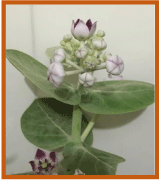
Herbal medicines exhibit a remarkable therapeutic diversity. Calotropis procera is an Ayurvedic plant which is used in several traditional medicines to treat a variety of diseases. This shrub has been known to possess various pharmacological activities including antidiabetic, anti-inflammatory, hepatoprotective, anthelmintic, antidiarrhoeal, antimalarial, and many more [3].
Leaf's chemical profile shows leaf chemical profiling, it shows-- moisture content (10.92%), crude protein (28.53%), fat (20.42%) and carbohydrate (24.13%). Ash and crude fiber were 6.50% and 9.40% respectively. Mineral content were found to be Magnesium -36.5ppm potassium -24.5ppm, calcium -17.0ppm, sodium- 12.5ppm and Zinc -2.10ppm , while phosphorus 0.40ppm. Other phytochemicals like alkaloids (2.05%) others were in trace quantities (steroids, anthraquinone, terpenoids, phlobatannin, cardenolides and chalcones [4]. However, flavonoids were completely absent in the extract. The amino acids profile showed the presence of 17 amino acids out of the 20 important amino acids, tryptophan was absent.
Several alkaloids, tannins, & resins have been isolated from this plant [5]. The plant has been used for various disease condition including leprosy, ulcers, tumors and piles. Various pharmacological activities reported like Analgesic activity, Antipyretic activity apart from Pregnancy interceptive activity, Anti-inflammatory activity, Procoagulant activity, Anti-diarrhoeal activity, free redical scavenging activity, Antimicrobial Activity, Anti-tumor activity, Antifungal activity, Antitussive activity, and Antifeedent activity. Its use for treatment of arthiritis and rheumatism is also known [6].
Moringa oleifera
Moringa oleifera is a multipurpose plant belonging to family Moringaceae (figure 3). It is commonly called as Murunga in Srilanka. From ancient times uses of different part of Moringa plant is known all over the world. It is very well documented that it has been used for relieving pain, rheumatoid arthritis, sciatica and osteoarthritis. Many diseases can be cured, however recently many researchers have reported the antioxidant property of the plant. The result revealed that it is a good source of natural antioxidant compounds. Hence Moringa oleifera can be used to cure illness related to oxidative degenration [7].
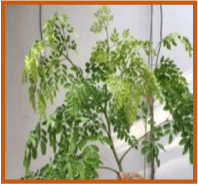
Moringa oleifera Lam (Moringa) is a medicinal plant found in most parts of the world. Various parts of this plant such as leaves, roots, seeds, barks, fruits, flowers and immature pods are reported to possess various therapeutic properties including antitumor, anti-inflammatory, antihypertensive, cholesterol lowering, antidiabetic, and antimicrobial properties. The chemical composition reveal presence of Alkaloids, moringin, moringninie and pterygospermin. Analytical results showed higher phenol content (260 ± 0.58 mg/g dry. wt.) in Moringa oleifera leaves. Thus using leaves of Moringa oleifera in health promotive purposes may be a better option than other parts of the plant [8].
Murraya kaenigii
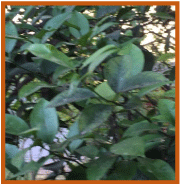
Murraya kaenigii is known as Karapincha in Srilanka, belongs to family Rutaceae (figure 5). The pharmacological review on Moringa oleifera illustrates that it has been used traditionally to overcome several ailments like diabetes, diarrhea, anti-infective, anti-inflammatory and other diseases [9]. Leaves of plants are frequently used in cooking of "curry" so called the curry leaves. The chemical composition shows presence of p-elemene, p-caryphyllene, o-phellandrene, carbazole alkaloids and bioactive coumarins. The literature survey includes reported traditional uses, reducing the Vatha and Kapha doshas according to Ayurvedic concept of treatment. The investigation of the anti-inflammatory and analgesic activity of methanol extract of dried leaves of Moringa oleifera Linn by oral administration at dose of 100, 200 and 400 mg/kg body weight, to healthy animals has been carried out [10] through Carrageenan induced inflammation study to check its potency and was found to be very active for albino rats [11].
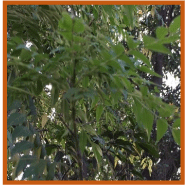
Lantana camara
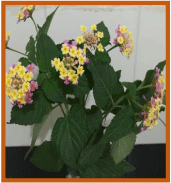
Lantana camara belongs to family Verbenaceae is also another very popular plant in (figure 2) Srilanka popularly known as Gandapana. The leaves extracts have been known to have anti-inflammatory and analgesic activity as reported by Gidwani et al. [12]. The medicinal properties of the plant have been described in details [13] with special emphasis on anti-inflammatory and wound healing properties. The presence of oleanonic acid in Lantana has the main anti-inflammatory effect. As a tea, lantana leaves can be used for relief from headaches, fever, flu, coughs, colds toothaches and indigestion. It also relieves the symptoms of rheumatism and other joint pains [14].
Citrus sinensis
Citrus sinensis is commonly called (Punchi jambola) in Srilanka and it belongs to the family Rutaceae (figure 4). It is also known to be healing gout and rheumatism. It is known that orange juice consumption can play a role in modulation of inflammatory markers through bioactive compounds, such as the flavonoids (hesperidin, naringenin) [15]. The major phytochemical in the leaves are limonene, isolimonene, citral and erucylamide.
Results and Discussion
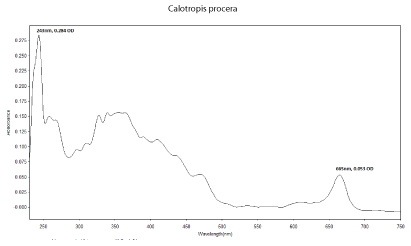
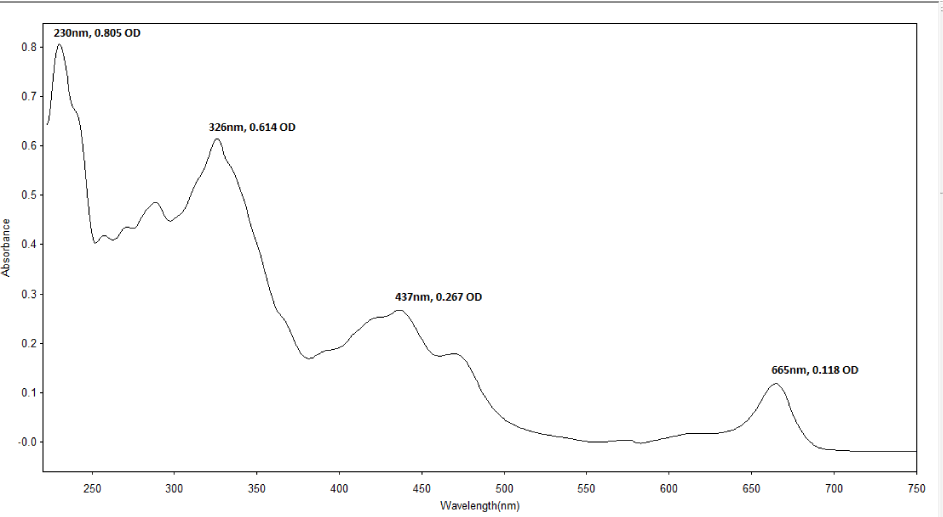
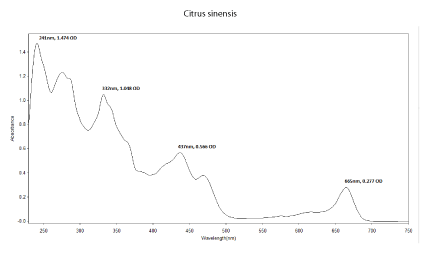
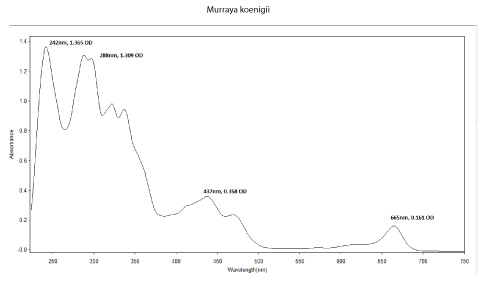
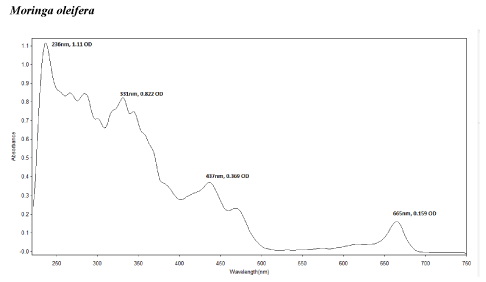
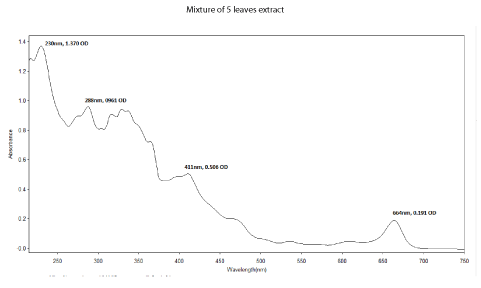
The UV-Visible spectra of the extracts also show significant peaks quite different from each other in all the 5 extracts as shown in figures-6, 8, 10, 12 and 14. The UV-Visible spectrum of the mixture shows difference in peaks and their Optical Density (OD) as shown in figure-16.
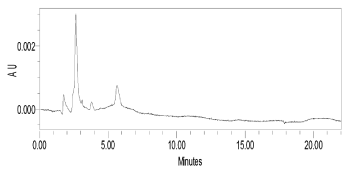
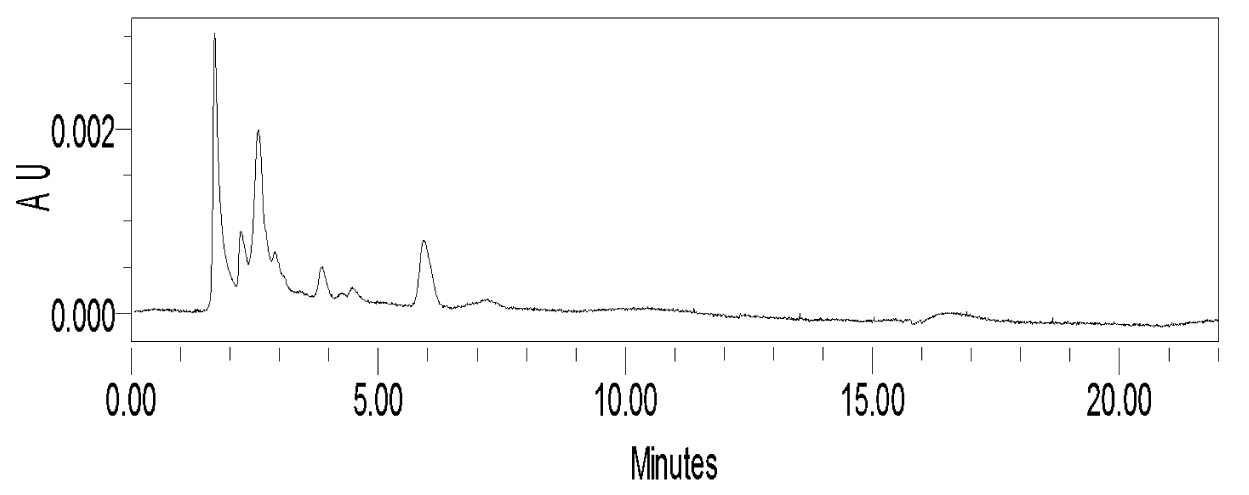
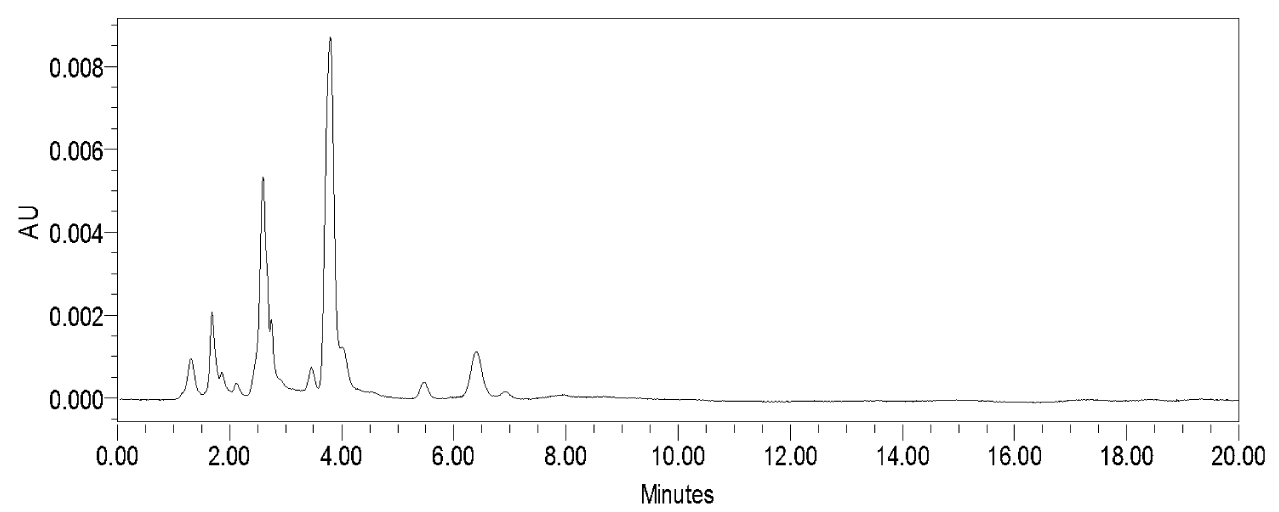
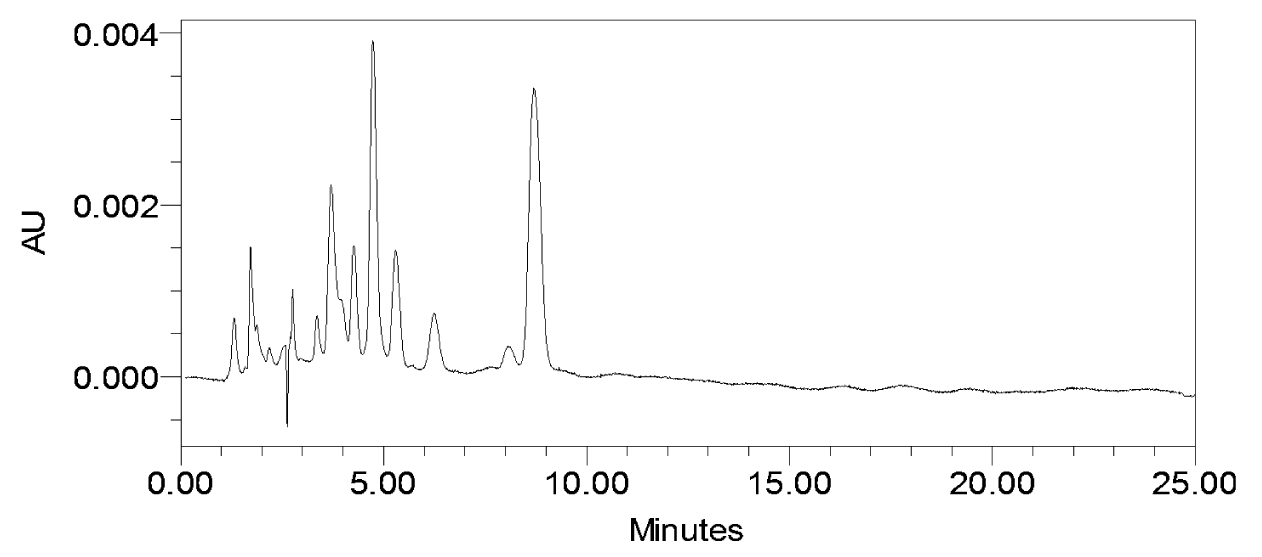
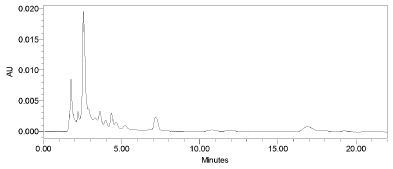
The HPLC analysis of the crude extract of the leaves of Calotropis, Lantana, Moringa, Murraya and Citrus show very prominent peaks indicating very different phytochemicals in each of the extract. They are mostly polyphenols, lignans, flavonoids, alkaloids, terpenoids saponins and polysaccharides as shown in figures- 7,9,11,13 and 15. The HPLC of the mixture of 5 extract looks very different from individual ones as shown in figure-17.
Of all the phtochemicals that play vital role in the anti-inflammatory activity- Flavonoids act as either phospholipase inhibitor or as TNF α- inhibitors under different inflammatory conditions. Alkaloids and terpenoids have also been reported to have inhibitory effect in joint swelling [16].
The rate and dose in reducing the inflammation was studied by using the ethanolic extracts of the 5 leaves in equal quantities and applied externally at the swollen part when applied externally as shown in Table-1, when the mixture is applied once, and allowed to act for 10 mins the action in reducing the inflammation is just 1-2 %, however the results are better in double application and still better in triple application at the interval of 10 mins each. These are very preliminary studies. But certainly the synergistic effect has caused better action than the action of individual extract as can be seen in Table -2.
Conclusion
Thus it can be concluded from this study that individual effect of the crude extract of leaves of Calotropis, Lantana, Moringa, Murraya and Citrus on anti-inflammatory activity is not so pronounced as the synergistic effect of the extracts both in reducing the inflammation as well as pain. Isolation of a single entity for showing anti-inflammatory activity is therefore not required as this mixture is able to minimize the inflammation and pain significantly. However further detailed study is required to understand the exact molecular mechanism of action against inflammation and pain.
- Marron JC, Bost J W and Mroon A. Natural anti-inflammatory agents for Pain relief. Surg Neurol Int. 2010; 1: 80. https://goo.gl/xzdlia
- Yogesh Murti, Saurabh Sharma and Pradeep Mishra. Analgesic potential of Calotropis procera (Ait.) R. Br. Leaves. J chem. 2015; 7: 1245-1249. https://goo.gl/nLeqjE
- Manoj Kumar, Savina. Review on a medicinal herb Calotropis procera Linn. J Pharm Res Int. 2015; 4: 907-917. https://goo.gl/HstiyR
- Ajiboso S O, Yakubu M T, Oladiji A T. Chemical profile of aqueous extract of Calotropis procera leaf. J Pharm Res Int. 2015; 4: 362-369. https://goo.gl/R3Ssph
- Namrata Singh, Piush Gupta, Atul V. Patel, A. K. Pathak. Calotropis gigantea: a review on its phytochemical & pharmacological profile. J Phcog. 2014; 1: 1-8. https://goo.gl/z1UN3b
- https://goo.gl/adfxa8
- Abdulaziz Rabiu Abdulkadir, Dhiya Dalila Zawawi, Md. Sarwar Jahan. DPPH antioxidant activity, total phenolic and totalflavonoid content of different part of Drumstic tree (Moringa oleifera Lam.). J chem. 2015; 7: 1423-1428. https://goo.gl/bygAjA
- J Sravanthi, S Gangadhar Rao Antioxidative studies in Moringa oleifera Lam. Annals of Phytomedicine. 2014; 3: 101-105. https://goo.gl/nLho3i
- Deepak Sharma, HemRaj Vashist, RB Sharma. Pharmacological aspects on Murraya koenigii-a review, European Int j pharm biomed res. 2015; 2: 664-678. https://goo.gl/qVE5gU
- Gupta S, George M, Singhal M, Sharma G N, Garg V. Leaves extract of Murraya koenigii for anti-inflammatory and analgesic activity in animal models. Journal of Adv Pharm Technol Res. 2010; 1: 68-77. https://goo.gl/x6WDCR
- Mathur A, Prasad GBKS, DuaV K. Anti-inflammatory activity of leaves extracts of Moringa oleifera L. Int J Pharma Bio Sci. 2011; 2: 541-544. https://goo.gl/mKCbdM
- BK Gidwani, Sushil Bhargava, SP Rao, A Majoomdar, DP Pawar, RN Alaspure. Analgesic, anti-inflammatory and anti hemorrhoidal activity of aqueous extract of Lantana camara. Res J Pharm Technol. 2009; 2: 378-381. https://goo.gl/BwKyAL
- Sanjeeb K, Gaurav K, Loganathan K,Kokati V, Bhaskara R. A review on Medicinal properties of Lantana Camara linn. Res J Pharm Technol. 2012; 5: 711-715. https://goo.gl/QLm6XD
- https://goo.gl/TpKRDQ
- Coelho RC, Hermsdorff HH, Bressan J. Anti-inflammatory Properties of Orange Juice: Possible Favorable Molecular and Metabolic Effects. Plant Foods Hum Nutr. 2013; 68: 1-10. https://goo.gl/HTQNLU
- Y Bhagyasri, Lavakumar V, Diyasree M S and Ashok kumar CK. An Overview of anti-inflammatory activity of Indian Herbal plants. Int J Res Pharm Nano Sci. 2015; 4: 1-9. https://goo.gl/zbPvJb
Sign up for Article Alerts