Possible Applications of Electromagnetic Fields in the Treatment of Symptoms Related to Benign Prostatic Hyperplasia
Simone Brardi1*, Pasquale Biandolino2, Vanni Giovannelli3, Arben Belba4, Roberto Ponchietti5 and Gabriele Cevenini6
1Hemodialysis Unit, San Donato Hospital; Via P. Nenni; 52100, Arezzo, Italy
2Department of Anesthesia and Cardiothoracic Vascular Intensive Therapy; Referee anesthesiologist for vascular surgery, University Hospital of Siena Viale Bracci 34 53100 Siena, Italy
3UO Urologia Arezzo USL sud-est Toscana; Via Pietro Nenni, 52100, Arezzo, Italy
4Department of Urology Hospital Santo Stefano of Prato, Via Suor Niccolina Infermiera 20, 59100 Prato, Italy
5Professor of Urology, University of Siena; Viale Bracci 34 53100 Siena, Italy
6Department of Medical Biotechnology, University of Siena; VialeBracci 34 53100 Siena
*Address for Correspondence: Simone Brardi, Hemodialysis Unit, San Donato Hospital, Via P. Nenni, 52100, Arezzo, Italy, ORCID ID: https://orcid.org/0000-0003-3987-7339; E-mail: [email protected]
Submitted: 30 March 2020; Approved: 12 April 2020; Published: 14 April 2020
Citation this article: Brardi S, Biandolino P, Giovannelli V, Belba A, Ponchietti R, et al. Possible Applications of Electromagnetic Fields in the Treatment of Symptoms Related to Benign Prostatic Hyperplasia. Am J Urol Res. 2020;5(1): 006-010.
Copyright: © 2020 Brardi S, et al. This is an open access article distributed under the Creative Commons Attribution License, which permits unrestricted use, distribution, and reproduction in any medium, provided the original work is properly cited
Keywords: Electromagnetic field; Benign prostatic hyperplasia; Lower urinary tract symptoms
Download Fulltext PDF
Background: Electromagnetic fields induce many biological activities in the immune system. They also have analgesic properties and are non-invasive, safe, and easy to apply in a wide spectrum of chronic inflammatory diseases. The aim of this observational perspective study was to evaluate the therapeutic effects of a new device, STIM-PLAVIM® (DF, Via L.Landucci 4, 53100 Siena, Italy) that can simultaneously generate an intense variable magnetic field and vibratory stimulation on a small group of patients with benign prostatic hyperplasia not satisfactorily responding to medical therapy after a treatment period of 6 months.
Materials and Methods: Ten males outpatients with benign prostatic hyperplasia, who were undergoing conventional therapy, were treated for 30 consecutive minutes every 24 hours for 60 days using a novel medical device applied at the perineal level.
Results: The application of this new device was proven to be effective in our group of patients; the nocturia, the urinary hesitancy, the incomplete emptying and urgency diminished or disappeared promptly within the first week of treatment with the novel medical device.
Conclusion: The use of this new instrument resulted in rapid improvement of voiding symptoms attributed to bladder outlet obstruction secondary to Benign Prostatic Hyperplasia and thus improved globally the patients’ quality of life.
Abbreviations
EMF: Electromagnetic Field; BPH: Benign Prostatic Hyperplasia; LUTS: Lower Urinary Tract Symptoms
Introduction
Benign Prostatic Hyperplasia (BPH) is one of the main causes of patients seeking urological counselling in Western countries. It has been estimated that nearly 70 percent of United States men between the ages of 60 and 69 years, and nearly 80 percent of men ≥70 years, have some degree of BPH [1]. Even if, in more detail, the prevalence of histologically diagnosed BPH increases from 8 percent in men aged 31 to 40, to 40 to 50 percent in men aged 51 to 60, to over 80 percent in men older than age 80 [1]. BPH is a histologic diagnosis defined as an increase in the total number of stromal and glandular epithelial cells within the transition zone of the prostate gland. BPH results in Benign Prostatic Enlargement (BPE) that can, in turn, lead to Benign Prostatic Obstruction (BPO). BPE and BPO are often associated with Lower Urinary Tract Symptoms (LUTS), which can be subdivided into symptoms of urinary storage (eg, urgency, daytime frequency, nocturia, incontinenc,e etc), symptoms of urinary voiding (eg, slow stream, intermittent stream or intermittency, hesitancy, straining to void, terminal dribble, disuria, etc) and post-voiding symptoms (eg, sensation of incomplete bladder emptying, post-void urinary dribbling, etc). Clinically significant BPH presents as LUTS with a predominance of voiding symptoms and the patients experience progressive symptoms that can range from nocturia to acute urinary retention and may include incomplete emptying, urinary hesitancy, weak stream, frequency, and urgency [2]. All above-mentioned symptoms reported by patients with BPH contribute to a significantly reduced quality of life [3].
The therapy is generally based on the primary factors responsible for LUTS in an individual patient to target appropriate treatment. Patients affected by BPH may be found to have Bladder Outlet Obstruction (BOO), Overactive Bladder (OAB), or both. Symptoms of OAB overlap with those attributed to BOO secondary to BPH despite that overactive bladder is typically associated with storage symptoms such as frequency, urgency, and nocturia rather than voiding symptoms that range from nocturia to acute urinary retention and may include incomplete emptying, urinary hesitancy, weak stream, frequency, and urgency [2].
That said the initial treatment for BOO secondary to Benign Prostatic Hyperplasia (BPH) is generally pharmacologic, especially in patients with mild to moderate symptoms and no clear indication for surgical intervention. Medical therapy consists of alpha-blockers, 5-alpha reductase inhibitors, or a combination of these agents. Alpha-blockers are first-line agents used for the treatment of symptomatic BPH. They function to relax the smooth muscle tone at the bladder neck and prostate. 5-alpha reductase inhibitors are useful for LUTS secondary to BPH only in the presence of prostate enlargement. Combination therapy with both alpha blocker and alpha reductase inhibitor drugs may be more effective than monotherapy with either drug alone [4].
For patients with LUTS related to OAB instead the primary goal is to decrease involuntary detrusor contractions triggered by the neurotransmitter acetylcholine by the anticholinergics agents that are acetylcholine muscarinic receptor antagonist [2].
However for many years now the anticholinergic agents are considered effective treatment alternatives, as monotherapy or in combination with an alpha blocker, for the management of LUTS secondary to BPH in men without an elevated Post Void Residual (PVR) urine and when LUTS are predominantly irritative [5].
Eventually the surgical treatment is usually reserved for medication failure, progressive symptoms, or patient preference. Most procedures used in the treatment of BPH are performed transurethrally. Prostatic tissue can be removed (ie, resected) or destroyed (ie, ablated) using a variety of techniques, which include Transurethral Resection of the prostate (TURP), transurethral laser enucleation, etc. Other non-transurethral procedures include simple prostatectomy (open, laparoscopic, or robotic) and prostatic arterial embolization. However the choice of available procedures should be based on the size of the prostate gland, the patient’s bleeding risk, and his attitude toward potential sexual complications [6].
Several data in the literature reported that Magnetic Fields (EMF) have many biological activities capable of interfering with the ability to reproduce and differentiate cells, modulating the inflammatory system through the increase of oxide-reductive potential, and increasing microvascular motility, ATP production, hormonal secretion, antioxidant enzyme activity, and cellular metabolism [7]; moreover EMF at high frequency and low intensity allows to obtain significant therapeutic results without unwanted side effects, allowing their use also in a wide spectrum of chronic diseases characterized by functional disorders and pain, such as chronic inflammatory diseases [8].
The antiphlogistic and stimulating effects of the tissue repair produced by magnetic fields in humans allows to achieve favorable therapeutic results especially in diseases affecting the osteoskeletal system, such as the fractures and the arthropathies [9].
The vibrating systems are equipment capable of generating sinusoidal oscillations at various frequencies and transfer them to the body of the subject to be treated through pressure waves, with specially designed platforms capable of vibrating at variable frequencies (Hertz/sec) [10].
The treatment with vibrations exerts a safe myo-relaxant effect with consequent reduction of muscle spasticity and is widely used in the field of neuro-rehabilitation [11]. With vibratory frequencies varying between 5 and 30 Hz, an increase in cerebral cortisone and serotonin has been demonstrated in the rat; in humans mono or polysynaptic connections are activated in order to generate reflex contractions [12]. Vibrational massage (technological evolution of the classic manual muscle massage) can induce muscle relaxation, as documented by the literature regarding musculoskeletal rehabilitation therapy.
The aim of this research was to evaluate the therapeutic effects of a new medical device called STIM-PLAVIM®, which is capable of simultaneously generating an intense variable magnetic field and vibratory stimulation, on a group of 10 outpatients with BPH voiding symptoms attributed to bladder outlet obstruction secondary to BPH and already being treated with alpha-blocker agents but not satisfactorily responding to medical therapy after a 6-month treatment period.
Material and Methods
We conducted an observational prospective pilot study in 10 outpatients (age, 59-79 years) affected by voiding symptoms attributed to bladder outlet obstruction secondary to BPH and already being treated with alpha-blocker agents but not satisfactorily responding to the medical therapy after a 6-month treatment period. Each participant provided informed written consent prior to the start of the trial and voluntarily agreed to participate in the study without any monetary compensation. The study began on September 1, 2018 and ended on April 30, 2019.
According to the study design, no patient was to have a massive enlargement of the prostate gland therefore before enrollment in the study, patients underwent suprapubic ultrasound evaluation of the prostatic transverse diameter and the Prostate-Specific Antigen (PSA) value was recorded in order to include only patients with a moderate dimensional increase in the prostate.
In table 1, we synthesized the demographic data and inclusion criteria of each subject.
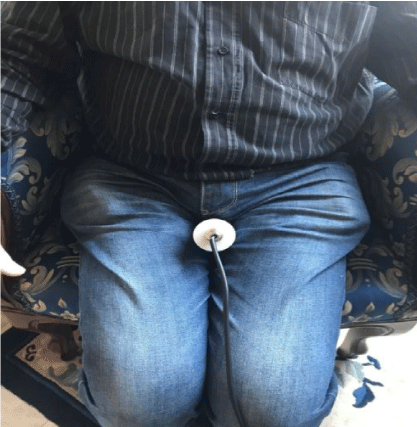
Without stopping the alpha-blocker agents already in use (the first-line therapy used for the treatment of voiding symptoms attributed to bladder outlet obstruction secondary to BPH in absence of prostate enlargement), we added to the therapy the application of the STIM-PLAVIM® medical device at the perineal level every day for 30 minutes for 60 days.
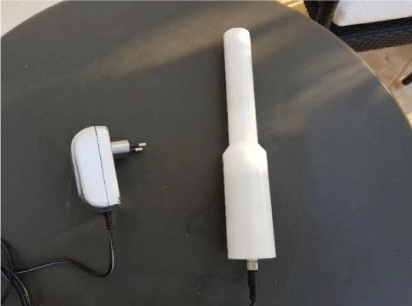
The instrumental generating magnetic and vibrational stimuli device we used to generate the two physical stimuli (magnetic and vibrational) consists of a high-quality (N 52) and high-intensity (1300 Gauss) fixed rotating magnet in neodymium placed in a cradle of stainless steel of suitable size. The cradle containing the fixed magnet is rotate by a low-voltage electric motor (4.5-12 volts) connected to the magnet housing by a transmission shaft engaged on a rotating motor by means of a special bearing.
Vibrational stimulation is generated during the rotation of the magnet housing, which is assembled in a slightly offset way, capable of producing a vibrational stimulus with different frequencies, and modulable by varying the intensity of the voltage (4.5, 6.0, 7.5, 9.0, and 12.0 volt) that powers the electric motor (Figure 1 and Figure 2).
Each patient provided consent to report the subjective evaluation of the symptoms during the previous month according to the International Prostatic Symptoms Score (IPSS) [12]. This evaluation was repeated after 60 days of the combined treatment (alpha-blocker agents and STIM-PLAVIM® medical device).
Comparisons between the data before and after 60 days were performed with the Student’s t test for paired data as a preliminary test of normality and the Kolmogorov-Smirnov test, which provided a positive result (p >0.05) for all three quantitative variables. A statistical significance level of 95% (p <0.05) was considered. All statistical analyses were performed again with IBM SPSS Statistics software version 25.
Results
The symptomatic and clinical laboratory results of using STIM-PLAVIM® as complementary therapy are summarized in table 2. Treatment with STIM-PLAVIM® led to rapid and marked improvement in subjective voiding symptoms attributed to bladder outlet obstruction secondary to BPH including nocturia, incomplete emptying, urinary hesitancy, weak stream, frequency, and urgency. Regression of symptoms, globally evaluated before the start of therapy (from moderate to severe) became mild in all subjects beginning 8 to 10 days after the start of complementary therapy and remained unchanged after 2 months of treatment.
The great reduction in the mean score of the IPPS from 15.9 (moderate symptoms) to 7.77 (reduction of more than 50%; mild symptoms) was clear and important. The Quality of Life index also improved significantly in the treated subjects after 60 days, decreasing from 4.72 to 2.88. No significant variation in the PSA value was observed in any patient. Eventually, we had not any statistically significant results based on the p.
Discussion
The application of this new medical device, STIM-PLAVIM®, was proven to be effective in our small group of ten patients with BPH. The use of this new and original medical device in addition to medical therapy with alpha-blocker agents led to a significant and rapid decrease in subjective voiding symptoms attributed to bladder outlet obstruction secondary to BPH that seriously affect the quality of life of the enrolled patients [13] and maybe not sufficiently controlled by the only therapy with alpha-blocker agents often burdened by side effects such as orthostatic hypotension and dizziness [14]. In addition, elderly patients often have one or more comorbidites (cardiovascular disease, diabetes mellitus, hypertension, chronic renal failure, neurological disorders) that may increase the side effects of these drugs [15]. Even more these favorable effects appeared rapidly, usually within 2 weeks of treatment, and remained constant over time for up to 2 months, as documented in our pilot observational prospectical study.
Our data are in agreement with those of Elgohary, et al. [16], who recently reported a significant improvement in subjective symptoms and a reduction in serum PSA in a large group of 67 patients with BPH treated with physical rehabilitative therapy and local applications of low-frequency electromagnetic fields.
Conclusions
The small group of treated subjects, mainly due to the limited availability of the medical device, represents an undoubted limit of this study which must be considered as a pilot study aimed at exploring the feasibility of a larger scientific work. However, it seems clear that the use of the new STIM-PLAVIM® device, non-invasive and free of side effects, can be of benefit to patients who, even in the absence of a massive enlargement of the prostate, have symptoms of emptying attributed to the obstruction of the exit bladder secondary to IPB not sufficiently controlled by alpha-blocker therapy.
- McVary KT. Epidemiology and pathophysiology of benign prostatic hyperplasia. In: UpToDate, post TW (Ed), UpToDate, Waltham, MA. 2020. https://bit.ly/3b0JRng
- McVary KT. Lower urinary tract symptoms in men. In: UpToDate, post TW (Ed), UpToDate, Waltham, MA. 2020. https://bit.ly/3eiB5TK
- Fourcade RO, Lacoin F, Rouprêt M, Slama A, Le Fur C, Michel E, et al. Outcomes and general health-related quality of life among patients medically treated in general daily practice for lower urinary tract symptoms due to benign prostatic hyperplasia. World J Urol. 2012; 30: 419-426. PubMed: https://www.ncbi.nlm.nih.gov/pubmed/21892656
- Roehrborn CG, Siami P, Barkin J, Damião R, Major-Walker K, Morrill B, et al. For the CombAT Study Group. The effects of dutasteride, tamsulosin and combination therapy on lower urinary tract symptoms in men with benign prostatic hyperplasia and prostatic enlargement: 2-year results from the CombAT study. J Urol. 2008; 179: 616-621. PubMed: https://www.ncbi.nlm.nih.gov/pubmed/18082216
- McVary KT, Roehrborn CG, Avins AL, Barry MJ, Bruskewitz RC, Donnell RF, et al. Update on AUA guideline on the management of benign prostatic hyperplasia. J Urol. 2011; 185: 1793. PubMed: https://www.ncbi.nlm.nih.gov/pubmed/21420124
- Cunningham GR, Kadmon D. Surgical treatment of benign prostatic hyperplasia. In: UpToDate, post TW (Ed), UpToDate, Waltham, MA. 2020. https://bit.ly/2Xst6gZ
- BinhiV, Savin A. Effects of weak magnetic fields on biological systems: physical aspects, PhysUspekhi, 2003; 46: 259-291. https://bit.ly/2Xug16M
- McFarlane JP, Foley SJ, de Winter P, Shah PJ, Craggs MD. Acute suppression of idiopathic detrusor instability with magnetic stimulation of the sacral nerve roots. Br J Urol. 1997; 80: 734-741. PubMed: https://www.ncbi.nlm.nih.gov/pubmed/9393294
- Haddad JB, Obolensky AG, Shinnick P. The biologic effects and the therapeutic mechanism of action of electric and electromagnetic field stimulation on bone and cartilage: New findings and a review of earlier work. J AlternComplementMed. 2007; 13: 485-490. PubMed: https://www.ncbi.nlm.nih.gov/pubmed/17604552
- Bosco C, Cardinale M. Nuove frontiere dell’allenamento sportivo: le vibrazioni. Effetti sul comportamento meccanico del muscolo scheletrico. Coaching and Sport Science Journal. 1998; 3: 53-59.
- Flieger J, Karachalios T, Khaldi L, Raptou P, Lyritis G. Mechanical stimulation in the form of vibration prevents postmenopausal bone loss in ovariectomized rats. Calcif Tissue Int. 1998; 63: 510-514. PubMed: https://www.ncbi.nlm.nih.gov/pubmed/9817946
- Rodrigues MP, Paiva LL, Ramos JGL, Ferla L. Vibratory perineal stimulation for the treatment of female stress urinary incontinenece: A systematic review. Int Urogynecol J. 2018; 4: 555-562. PubMed: https://www.ncbi.nlm.nih.gov/pubmed/28812109
- Abrams P, Chapple C, Khoury S, Roehrborn C, de la Rosette J. International Scientific Committee: Evaluation and treatment of lower urinary tract symptoms in older men. J Urol. 2009; 181: 1779-1787. PubMed: https://www.ncbi.nlm.nih.gov/pubmed/19233402
- Barry MJ, Fowler FJ Jr, O'Leary MP, Bruskewitz RC, Holtgrewe HL, Mebust WK, et al. The American Urological Association symptom index for benign prostatic hyperplasia. The Measurement Committee of the American Urological Association. J Urol. 1992; 148: 1549-1557. PubMed: https://www.ncbi.nlm.nih.gov/pubmed/1279218
- ZamanHuri H, HuiXin C, Sulaiman CZ. Drug-related problems in patients with benign prostatic hyperplasia: A cross sectional retrospective study. PloSOne. 2014; 9: e86215. PubMed: https://www.ncbi.nlm.nih.gov/pubmed/24475089
- Hany M Elgohary, Sayed A Tantawy. Pulsed electromagnetic field with or without exercise therapy in the treatment of benign prostatic hyperplasia. J PhysTher Sci. 2017; 29: 1305-1310. PubMed: https://www.ncbi.nlm.nih.gov/pubmed/28878453/
Sign up for Article Alerts